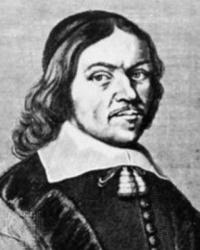
Eustace Monk
 France
- Biography of Eustache the Monk
- Quest for Justice
- Pirate and Mercenary
- The Fearsome Pirate
- Changing Alliances
- The Final Days
Biography of Eustache the Monk
Eustache the Monk, also known as Eustache Busket and Le Moine Noir (The Black Monk), was a renowned French mercenary and pirate whose life served as the basis for numerous legends about medieval outlaws. Born around 1170 in Boulogne-sur-Mer, Eustache was the youngest son of Baudoin Busket, a nobleman from Boulogne. His father's recent murder compelled him to seek vengeance, and in 1190, Eustache left St Samer Abbey, whether already a monk or not, to embark on his quest for justice.
Quest for Justice
Legend has it that Eustache journeyed to Toledo, Spain, to study black magic before returning to become the seneschal of Renaud de Dammartin, the Count of Boulogne, who also sought justice for his own grievances. However, when Eustache lost his legal battle, Renaud confiscated his lands and titles, leading Eustache to sever all ties and swear revenge. He raided and devastated Renaud's domains, stole his horses, and gathered discontented subjects under his command.
Pirate and Mercenary
Around 1204, a major dispute erupted between Eustache and Renaud, who accused him of abusing his authority. Eustache fled and was subsequently declared an outlaw. Renaud seized his lands, and in retaliation, Eustache burned two of Renaud's mills. Soon after his escape, Eustache began his career as a pirate in the waters of the English Channel and the Strait of Dover, establishing a base on Sark Island. He operated both for personal gain and as a mercenary for both France and England, selling the services of his fleet at the highest price.
The Fearsome Pirate
Eustache the Monk struck fear into the hearts of his enemies, with rumors circulating that he used black magic to make his ship invisible during battles. From 1205 to 1212, Eustache served intermittently under John Lackland against King Philip II of France, becoming a sort of admiral for the English fleet of 30 ships while continuing his piracy activities. For years, Eustache and his brothers plundered Normandy, the northern coast of France, and passing vessels. Even when he pillaged several English villages, the English king initially declared him an outlaw but later forgave him due to his valuable services.
Changing Alliances
In 1212, Eustache was forced to switch sides and align himself with the French king when his old enemy, Renaud de Dammartin, forged an alliance with John Lackland and turned the English king against Eustache. The English destroyed his island base, and in August 1217, as the civil war broke out in England, Eustache supported the rebellious barons and facilitated the crossing of Prince Louis of France, the future Louis VIII, when the barons offered him the English crown. During the ensuing battle, Eustache met the English fleet, causing death and panic among his former allies with his floating fortresses equipped with catapults and other advanced weaponry. However, the English rallied and defeated the French pirates in a fierce battle. While Eustache's flagship managed to escape, he was captured on August 24, 1217.
The Final Days
Eustache offered a large sum of money for his life, but the English people despised him so much that they chose to execute him. His brothers managed to escape and continued to maintain their bases in the waters of the English Channel. A Picardian poet, whose name remains unknown, wrote a romanticized biography of the pirate, 'Le Roman d'Eustache le moine,' between 1223 and 1284. This work became immensely popular in the Middle Ages, spawning countless legends and making Eustache the Monk a maritime equivalent of Robin Hood.