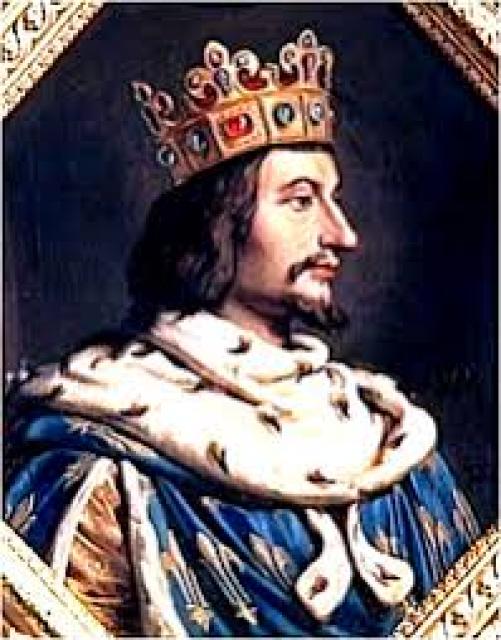
Eustache Deschamps
 France
- Eustache Deschamps: A Renowned Poet and Literary Scholar
- Diplomatic and Literary Pursuits
- Extensive Literary Corpus
- Satirical and Historical Ballads
- Personal Struggles and Poetic Outpouring
- Legacy in Literature and History
Eustache Deschamps: A Renowned Poet and Literary Scholar
Eustache Deschamps, an illustrious French poet and literary scholar of the 14th century, was born in Vertus (present-day Marne) in 1346. As the son of a bourgeois family, he embarked on his literary journey under the tutelage of Guillaume de Machaut, a renowned trouvère.
Diplomatic and Literary Pursuits
After completing his legal studies at the University of Orléans, Deschamps held various positions at the royal court, enjoying the patronage of Prince Louis of Orléans to whom he dedicated several of his works. His extensive travels spanned Flanders, England, Hungary, and Syria, where he was even captured and held prisoner by Saracens in Egypt.
Extensive Literary Corpus
Deschamps' literary legacy endures in the voluminous manuscript (National Library of France, BnF, fr. 840) that preserves approximately 1,500 of his diverse compositions, including ballads, rondeaus, poems, and three prose works. Notable among the latter is "L'Art de dictier et de fere chancons, ballades, virelais et rondeaulx" (1393), a treatise that meticulously analyzes popular poetic forms of his time.
Satirical and Historical Ballads
Deschamps' ballads (numbering around 1,175) showcase his satirical wit, keen observation, and familiarity with human nature. They cover a wide range of themes, from the futility of existence to the oppression of rulers, the folly of nobles who spurn scholarship, and the burden of excessive taxation. Many of his ballads chronicled political events and contained valuable historical insights, particularly concerning the Hundred Years' War in which he served as a royal bailiff. Deschamps harbored an intense animosity towards England, famously predicting its downfall in one of his ballads that resonated well into the 16th century.
Personal Struggles and Poetic Outpouring
In his later years, Deschamps' poetry reflected his growing sense of despair and disillusionment. He lamented the ingratitude of others, his financial woes, and the domestic turmoil caused by an unhappy marriage. His most ambitious work, "Le Miroir de mariage," an unfinished poem of over 13,000 verses, is a scathing indictment of women in general and his wife in particular.
Legacy in Literature and History
Eustache Deschamps' literary contributions cemented his place as a prominent figure in 14th-century French literature. His works provide valuable insights into the social, political, and cultural landscapes of his era, earning him recognition as one of the most influential poets of his time. His mastery of poetic forms, satirical wit, and nuanced observations continue to resonate with readers and scholars alike, ensuring his enduring legacy in the annals of literary history.