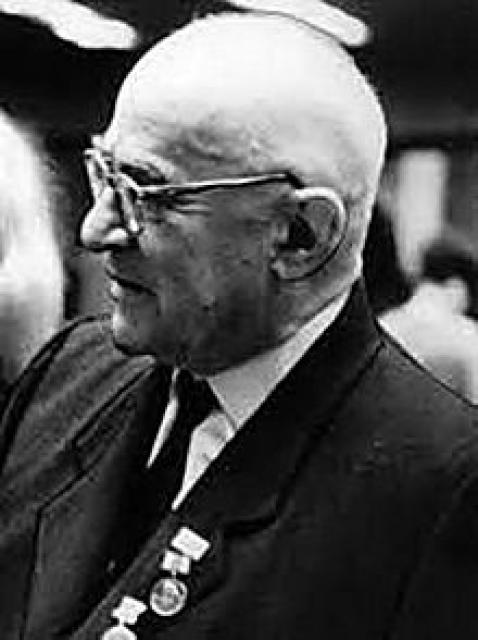
Evgeniy Golant
- Russian Educator and Professor
- Early Teaching and Literacy Initiatives
- Contributions at Leningrad Institutes
- Literacy and Educational Methods
- Pedagogical Philosophy
- Historical Pedagogy
Russian Educator and Professor
Early Life and EducationBorn in 19th-century Russia, the renowned educator began his illustrious career by completing degrees in history, philology, and law from the prestigious University of St. Petersburg in 1911.
Early Teaching and Literacy Initiatives
Upon graduating, the educator delved into the field of teaching, joining the faculty of a private gymnasium in 1912. His passion for education extended beyond the classroom walls, as he actively participated in the Soviet Union's efforts to eradicate illiteracy. Notably, his primer titled "Let's Study" (1918) became a fundamental resource for adult learners.
Contributions at Leningrad Institutes
From 1921 onwards, the educator made significant contributions to pedagogy at various institutes in Leningrad. These included the Institute of Extracurricular Education (1921-1930), the Institute of Scientific Pedagogy (1925-1938), and the A.I. Herzen Leningrad State Pedagogical Institute (1928-1971).
Literacy and Educational Methods
The educator developed innovative primers and textbooks for adult learners that blended the whole word method with analytical-synthetic techniques. His research aimed to establish a connection between teaching principles and the students' personal experiences in production, life, and politics.
Pedagogical Philosophy
The educator believed that the pedagogical curriculum should reflect the philosophical and historical context of the times. His pedagogical philosophy emphasizes the role of personal experience and acknowledges the diverse educational needs of students.
Historical Pedagogy
His scholarly work in the history of pedagogy placed particular importance on the evolution of school education in Europe and the Americas. He provided insightful analyses of educational practices, connecting them to broader societal trends.




