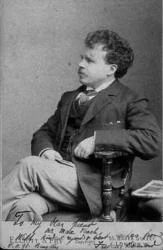
Evgeniy Wolf-Israel
- Early Life and Conservatory Training
- The Mariinsky and the Concert Stage
- Teacher and Conservatory Professor
- Honors and Later Years
Evgeniy Wolf-Israel (1872–1956) was a Russian and Soviet cellist, teacher, and conductor whose career stretched across the final decades of the Russian Empire and the first half of the Soviet era. A leading player at the Mariinsky Theatre and later a professor at the St. Petersburg Conservatory, he combined a long orchestral career with solo performances, chamber music, and influential teaching.
Early Life and Conservatory Training
Wolf-Israel was born in St. Petersburg on July 26, 1872, according to the date used by several musical reference sources. Dates in institutional records vary: the St. Petersburg Conservatory notes that some sources give 1874 instead. He began studying cello as a child and entered the St. Petersburg Conservatory at about age 12.
At the Conservatory, he studied with Karl Markus and later with the celebrated cellist Alexander Verzhbilovich. He completed his studies in 1892, graduating with a gold medal. The training placed him in a distinguished Russian cello tradition associated with the expressive, singing tone of the instrument.
The Mariinsky and the Concert Stage
Wolf-Israel began playing with orchestras in St. Petersburg in the early 1890s and joined the Mariinsky Theatre orchestra in 1894. He rose from section cellist to second soloist and, in 1909, first soloist. He remained with the theater for decades, becoming a central figure in its musical life. From 1917 to 1925, he also headed the orchestra.
In addition to opera and ballet performances, Wolf-Israel appeared as a soloist and chamber musician. His repertoire included cello concertos by Robert Schumann, Bernhard Romberg, and Karl Davydov, as well as works by Alexander Glazunov. He performed in symphonic concerts, toured in parts of northern and central Europe, and collaborated with prominent musicians of his time. Contemporary descriptions praised the depth and beauty of his tone and the clarity of his phrasing.
Teacher and Conservatory Professor
In 1921, Wolf-Israel joined the Conservatory faculty, where he taught cello and later chamber ensemble and quartet classes. He became a professor in 1926 and served in academic leadership roles, including as acting rector and deputy rector during the 1929–30 academic year. He also taught at music schools and helped develop musical education beyond the conservatory.
His students included cellists Grigory Pekker, Vladimir Stoller, and Boris Struve, as well as many orchestra musicians. As a teacher, he passed on the tradition of treating the cello as a singing instrument, while preparing students for both solo and ensemble work.
Honors and Later Years
Wolf-Israel received the title of Honored Artist of the Republic in 1919 and was named Honored Artist of the RSFSR in 1935. In 1939, he received the Order of the Red Banner of Labour. He remained active in Leningrad through the wartime period and was awarded the Medal for the Defense of Leningrad and a medal for labor during the Great Patriotic War.
He died in Leningrad, now St. Petersburg, on September 26, 1956. His career left a mark on the city’s theater and conservatory life: for more than half a century he performed with the Mariinsky, and through his students he helped shape generations of Russian cellists.