
Evgeniya Rydneva
 Ukraine
Biography of Evgeniya Rudneva
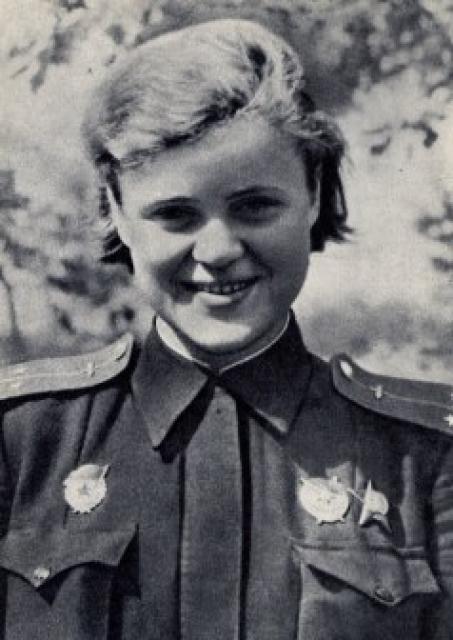
Evgeniya Maksimovna Rudneva was born on December 24, 1920, in the city of Berdyansk, currently in the Zaporizhia region of Ukraine. She grew up in Saltykova Village, Moscow Oblast and later in the city of Babushkin, which is now within the boundaries of Moscow. Rudneva's father was a civil servant, and she came from a Ukrainian family.
Passion for Science
Rudneva developed a love for science at a young age, particularly astronomy. In high school, she joined an astronomical circle and soon developed a strong desire to become an astronomer. In 1938, she graduated from secondary school with honors and became a student at the Mechanics and Mathematics Faculty of Moscow State University. Due to her exceptional hard work and curiosity, Rudneva quickly became one of the top students in her class. In the same year, she started working at the All-Union Astronomical and Geodetic Society (VAGO) in the Solar Department and became the head of the department the following year. She also worked in the Variable Stars Department and spent many nights observing at the Presnya Observatory. In 1939, Rudneva published her first scientific article, "Biological Observations during the Solar Eclipse of June 19, 1936," in the VAGO Bulletin.
War Years
When the Great Patriotic War (World War II) began, Rudneva was in the middle of her spring exam session on the third year of her university studies. Despite her promising future as a student, she made the decision to join the war effort. She enlisted in the Red Army in October 1941 and completed her training as a navigator. From May 1942, Rudneva served as a navigator in various aviation units, including the 46th Guards Night Bomber Aviation Regiment, 325th Night Bomber Aviation Division, and the 4th Air Army of the 2nd Belorussian Front. She carried out 645 combat night flights, targeting enemy transport, bridges, and military installations. She fought on the North Caucasus, North Caucasus, and 4th Ukrainian Fronts, participating in battles in the North Caucasus, Taman Peninsula, and Kerch Peninsula. Rudneva was a dedicated member of the Communist Party of the Soviet Union since 1943.
Honored Hero
Tragically, Evgeniya Rudneva died a hero's death on the night of April 9, 1944, while carrying out a combat mission north of the city of Kerch in the Crimean SSR. Even before her death, she had been recommended for the title of Hero of the Soviet Union. On October 26, 1944, the Presidium of the Supreme Soviet of the USSR posthumously awarded her the title of Hero of the Soviet Union for her exemplary execution of combat missions and her courage and heroism in battles against the German fascists. Rudneva was also awarded the Gold Star Medal, the Order of Lenin, the Order of the Red Banner, the Order of the Patriotic War 1st Class, and the Order of the Red Star. Her memory is honored with monuments and busts in various cities, including Moscow, Saltykova Village, and Kerch. She also has streets and a school named after her in Berdyansk, Kerch, Moscow, and Saltykova Village. In addition, an asteroid in the Solar System was named "Rudneva" in her honor, and a memorial plaque was placed on the building of the P.K. Sternberg State Astronomical Institute.
In Berdyansk, the Evgeniya Rudneva Center for Children and Youth Creativity (formerly the Pioneers' House) is named after her.


