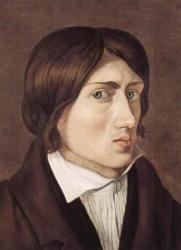
Ezhen Larmans
 Belgium
- Biography of Eugène Laermans
- The Depiction of Belgian Village and Working Class
- The Tragic Suppression and Dramatic Circumstances
- An Epic Artist and the Social Drama
- Archaic Techniques and Symbolism
- Engraving and Contributions to Art Journals
Biography of Eugène Laermans
Eugène Laermans was a Belgian artist who played a significant role in the artistic movement of Belgium during the late 19th and early 20th centuries. Born in 1864, Laermans studied at the Brussels Academy of Fine Arts under the guidance of Jean Portaels, a renowned teacher who influenced many notable artists of the time.
The Depiction of Belgian Village and Working Class
Laermans dedicated his entire career to portraying the Belgian countryside and the inhabitants of its working-class outskirts. The titles of his paintings, such as "Emigrants," "Beggars," "Blind," and "Sick Child," reflect the dramatic themes that characterized his work and had a strong impact on viewers.
The Tragic Suppression and Dramatic Circumstances
Many of Laermans' paintings carry the mark of tragic repression. This can be partly explained by the dramatic circumstances of the artist's own life. Having lost his hearing and speech in childhood due to illness, Laermans lived with the constant threat of losing his vision. Yet, he actively sought out intense and piercing impressions as an artist. His paintings depicted the everyday scenes he witnessed while living on the outskirts of the city - peasants with carts loaded with vegetables, workers carrying their tools. He showed how the heavy, burdensome labor deformed the appearance of individuals and left a characteristic imprint on them. Faces with rough features appear gloomy and similar to each other, while clothing falls in heavy, large folds, lending monumentality to the figures.
An Epic Artist and the Social Drama
Laermans was a master at constructing composition, bringing his characters together in expressive groups, zigzagging roads or rivers to diversify the bleak and monotonous landscape, guiding the viewer's gaze as intended by the artist. His chosen themes not only reflected his commitment to the democratic tradition in Belgian art of the 19th century but also positioned him as the successor of the traditions of the Northern Renaissance painting of the 16th century, particularly the works of the great master Pieter Bruegel the Elder. The solemnity, poeticism, restraint, and high concentration of emotions in Laermans' paintings testify to the influence of the Northern Renaissance art.
Archaic Techniques and Symbolism
Laermans embraced the artistic tastes of the late 19th and early 20th centuries, employing an overall archaic approach, simplification and flattening of forms, large formats that turned his paintings into panels, and active use of symbolism. In his notable work "The Blind," Laermans revisited the traditional theme of the blind man with a guide, embodying the idea that humans blindly navigate a hostile world and that true vision lies within. The winding road in the vast empty space symbolizes the long and difficult journey of human life.
Engraving and Contributions to Art Journals
Eugène Laermans was widely recognized not only as a painter but also as an enthusiast of printmaking techniques such as etching and soft wax. He co-founded the artistic journals "For Art" and "Art Today," which were published in Belgium during the early 20th century.