Frants Pforr
 Italy
ItalyBiography of Franz Pforr
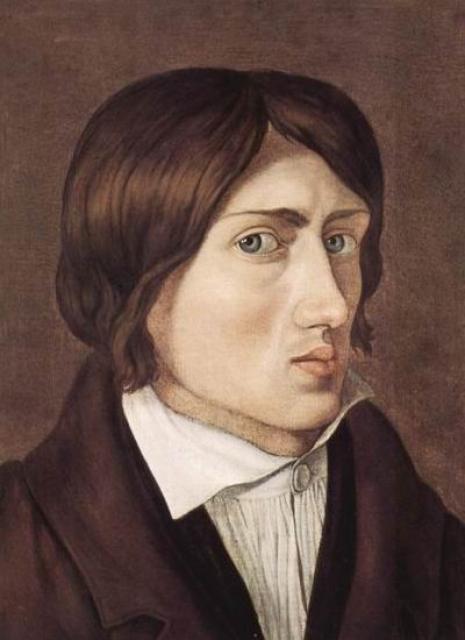
Franz Pforr was a German painter and a pioneer of the Nazarene movement in art. He lost his parents at the age of 12, and the following year, he also lost his only brother. From 1801, he was raised by his uncle, the renowned artist Johann Heinrich Wilhelm Tischbein, in Kassel. It was there that he began to study painting, and in 1805, he entered the Academy of Fine Arts in Vienna, where he was taught by the classicist artist Heinrich Friedrich Füger.
Pforr's father, Johann Georg Pforr, was a painter who specialized in depicting horses, while his mother, Johanna Christiana Pforr, came from the artistic Tischbein family. Pforr and his fellow students, Ludwig Vogel, Johann Conrad Göttinger, and Friedrich Overbeck, were dissatisfied with the teachings at the academy. They had expected a more contemporary approach and a focus on spiritual values instead of the emphasis on classical art. They envisioned their own path in art by aligning themselves with the work of the old masters.
In 1809, these young artists founded the Brotherhood of St. Luke, an artistic association that promoted Romantic ideals. This led to a conflict within the academy, resulting in Overbeck being expelled in 1810. Members of the Brotherhood, including Pforr, then embarked on a journey to Italy. On June 20, 1810, they arrived in Rome, which was occupied by Napoleon's forces, and settled in the monastery of San Isidoro. Their goal was to study the works of the old Italian masters and revive the art of the Italian Renaissance. This movement later became known as the Nazarene movement and played a significant role in the development of early 19th-century European Romanticism.
Pforr tragically passed away from tuberculosis in Rome at the young age of 24, before receiving recognition for his artistic achievements. His legacy consists of only six paintings, including "Count von Habsburg," "The Entry of Emperor Rudolf into Basel," "Saint George," "Self-Portrait," and an allegory of friendship between himself and Overbeck. He also left behind several hundred drawings, including illustrations for Don Quixote and Goethe's poem "Götz von Berlichingen." Despite his limited body of work, Pforr is considered one of the founders and most important representatives of German Romanticism. His art strongly emphasizes religious themes.