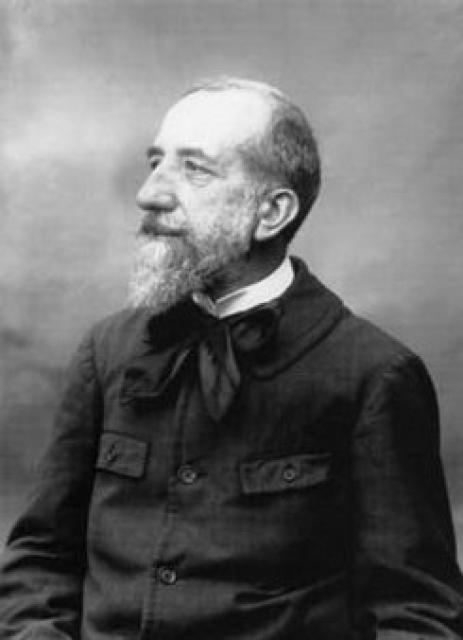
Federico Zandomeneghi
 Italy
Italy- Federico Zandomeneghi: Italian Impressionist
- Participation in the Italian Independence Movement
- Macchiaioli Association in Florence
- Adoption of Impressionism
- Paris Exhibitions and Artistic Influences
- Financial Challenges and Illustrative Work
- Late Success and Retrospectives
- Legacy and Distinctive Style
Federico Zandomeneghi: Italian Impressionist
Early Life and EducationBorn into a family of renowned sculptors, Federico Zandomeneghi emerged as an Italian painter who embraced the principles of Impressionism. From 1856 to 1859, he studied at the Academy of Fine Arts in Venice, followed by further training in Pavia.
Participation in the Italian Independence Movement
Zandomeneghi actively participated in the national movement for Italian independence, joining Giuseppe Garibaldi's "Expedition of the Thousand." This experience profoundly influenced his artistic perspective.
Macchiaioli Association in Florence
From 1862 to 1866, Zandomeneghi resided in Florence, where he became part of the pioneering Macchiaioli movement. He forged friendships with artists such as Giovanni Fattori and Telemaco Signorini, sharing their aesthetic views.
Adoption of Impressionism
In 1874, Zandomeneghi abruptly relocated to Paris, where he encountered the Impressionists. He drew inspiration from Henri de Toulouse-Lautrec and Edgar Degas, developing a unique style that combined Impressionist principles with his own artistic sensibilities.
Paris Exhibitions and Artistic Influences
Zandomeneghi participated in Impressionist exhibitions from 1879 to 1886, earning recognition for his distinctive depictions of Parisian life. His paintings captured moments of urban elegance and the intimate lives of individuals, often incorporating influences from Mary Cassatt and Pierre-Auguste Renoir.
Financial Challenges and Illustrative Work
Despite his artistic success, Zandomeneghi faced financial struggles. He supplemented his income by illustrating fashion magazines, adding a commercial element to his practice.
Late Success and Retrospectives
In 1893, Zandomeneghi granted exclusive rights to his works to the renowned art dealer Paul Durand-Ruel. This partnership provided him with financial security and increased his visibility. In 1914, a major retrospective of his work was held in Venice, though full recognition in his homeland came posthumously.
Legacy and Distinctive Style
Federico Zandomeneghi's artistry transcended the boundaries of Impressionism, remaining deeply rooted in his Italian heritage. His paintings are characterized by decorative motifs, stylized forms, and a vibrant palette. Notable works include "Mother and Daughter," "Peonies," and "Tea." Today, his works can be found in private collections and major institutions, including the Pinacoteca di Brera in Milan and the Uffizi Gallery in Florence.