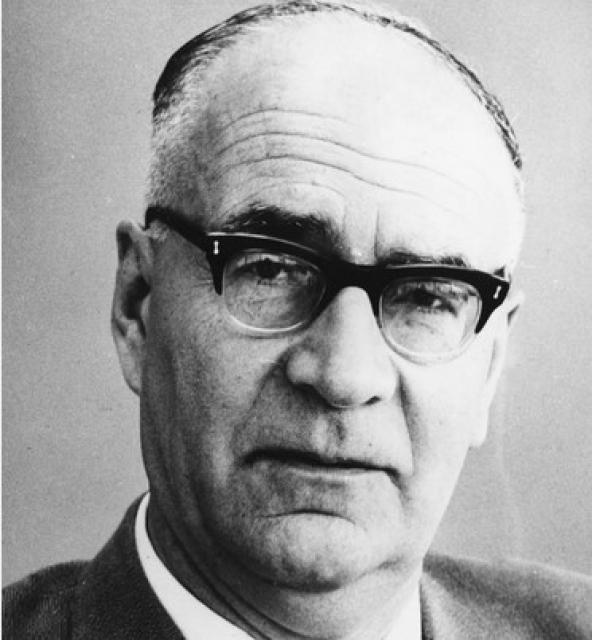
Felix Wankel
 Germany
- Felix Wankel: Inventor of the Rotary Engine
- Early Career and Political Affiliation
- Revolutionary Invention: The Rotary Engine
- Collaboration and Wartime Contributions
- Post-War Challenges and Triumph
- Commercial Success and Industry Recognition
- Academic Distinctions
- Legacy and Impact
Felix Wankel: Inventor of the Rotary Engine
Early Life and EducationFelix Heinrich Wankel was born on August 13, 1902, in Lahr, Germany. His childhood took a tragic turn when his father died during World War I, forcing him to drop out of high school and work at a bookstore. Despite the hardships, Wankel remained an avid reader, particularly in technical literature.
Early Career and Political Affiliation
In 1924, Wankel established his own small workshop. He also briefly joined the National Socialist German Workers' Party (NSDAP) but disillusioned by their policies, left in 1933 and was imprisoned for six months. Nevertheless, his passion for mechanical engineering persisted.
Revolutionary Invention: The Rotary Engine
In 1936, Wankel patented his groundbreaking invention, the DKM-32 (Drehkolben Maschine) rotary engine. He established a research laboratory in Lindau, where he developed not only engines but also rotary compressors and pumps.
Collaboration and Wartime Contributions
During World War II, Wankel collaborated with the German military, offering his inventions to the aviation and shipbuilding industries. He also worked closely with the Japanese electronics firm Hitachi to develop high-speed aircraft engines.
Post-War Challenges and Triumph
After the war, Wankel struggled to rebuild his business. In 1951, he re-established his laboratory and forged a successful partnership with NSU, a motorcycle manufacturer. Wankel's rotary engine significantly boosted the performance of motorcycles, allowing them to reach record-breaking speeds.
Commercial Success and Industry Recognition
As automobiles gained popularity over motorcycles, NSU shifted its focus to car production. Wankel's fame skyrocketed with the NSU-Ro80, a sedan powered by his revolutionary rotary engine. However, the company faced financial difficulties and discontinued production, licensing the engine design to other manufacturers.
Academic Distinctions
In 1969, Wankel earned a doctorate in engineering from the Technical University of Munich and later became a professor. He received numerous awards and accolades for his contributions to the automotive industry.
Legacy and Impact
Felix Wankel passed away on October 9, 1988, at the age of 86. His rotary engine design became widely licensed and used by major manufacturers. Although its popularity waned due to fuel cost increases, Wankel's invention remains a testament to his ingenuity and enduring legacy in the world of automotive engineering.


