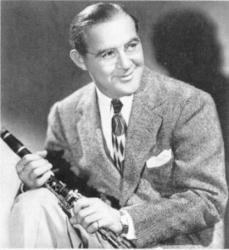
Ferdinand Griebel
 Germany
- German Virtuoso and Pioneer in Canada
- European Career and Revolutionary Impact:
- Pioneering in Canada:
- A Distinguished Legacy in Toronto:
- Conclusion:
German Virtuoso and Pioneer in Canada
Early Life and Training:Karl Heinrich Griebel was born into a prominent musical family in Berlin, Germany. His father, Johann Heinrich, was a renowned bassoonist, while his brothers, Heinrich Franz and Julius Heinrich, were accomplished oboist and cellist, respectively. Karl studied under Léon de Saint-Lubin, concertmaster of the Königstadt Theatre orchestra, and later joined the orchestra itself. He received further instruction from Heinrich Wilhelm Ernst and Charles Auguste de Bériot.
European Career and Revolutionary Impact:
From 1843 onwards, Griebel performed extensively throughout Europe. In 1848, amidst the political upheavals of the time, he joined a group of 25 young German musicians who formed the "Musik-Gesellschaft Germania" private orchestra. This ensemble embarked on a tour of North America, departing from Berlin on May 4, 1848.
Pioneering in Canada:
Griebel served as concertmaster of the Musik-Gesellschaft Germania during its American and Canadian tours. He accompanied the famous soprano Jenny Lind in 1851 and Catherine Hayes in 1852. In 1853, Griebel left the orchestra and settled in Toronto, becoming the first high-caliber professional violinist to establish a permanent residence in Canada.
A Distinguished Legacy in Toronto:
Griebel gave at least 36 concerts in Toronto during the last five years of his life, captivating audiences with his virtuosity and musicality. His legacy extended beyond his own performances, as his nephew, George Henry Griebel, became a prominent architect in the United States.
Conclusion:
Karl Heinrich Griebel was an exceptional German violinist whose influence extended from the concert halls of Europe to the burgeoning musical scene of Canada. His pioneering spirit and artistic excellence left an enduring mark on the development of classical music in North America.