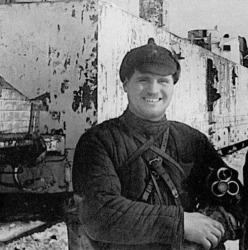
Ferdinand Pecenka
 Czech
Czech- Early Life and Career
- Artistic Development
- Collaborations with Václav Krška
- Notable Cinematic Achievements
- Later Works
Early Life and Career
Born in Czechoslovakia, the cinematographer began his career in the film industry in 1924. By 1933, he had established himself as a skilled operator.
Artistic Development
The cinematographer's unique style emerged through his collaboration on several influential films, including "Jánošík" (1936), "Philosophical History" (1937), "The Camel Passes Through the Eye of a Needle" (1937), and "Lover in a Mask" (1940).
Collaborations with Václav Krška
In the 1940s and early 1950s, the cinematographer joined forces with director Václav Krška, crafting visually stunning films with poetic elements. Notable works from this period include "The Violin and the Dream" (1947), "The Messenger of the Dawn" (1950), and "Mykolaš Aleš" (1951).
Notable Cinematic Achievements
Throughout his career, the cinematographer captured the essence of human stories through his poignant and immersive visuals. His filmography encompasses a wide range of genres, from romance to historical drama.
Later Works
In his later years, the cinematographer continued to push the boundaries of filmmaking, innovating in the use of lighting and camera techniques. He left a lasting legacy in the world of cinematography, inspiring generations of filmmakers to come.