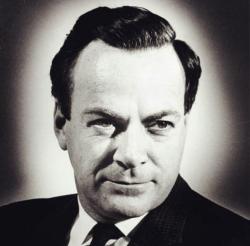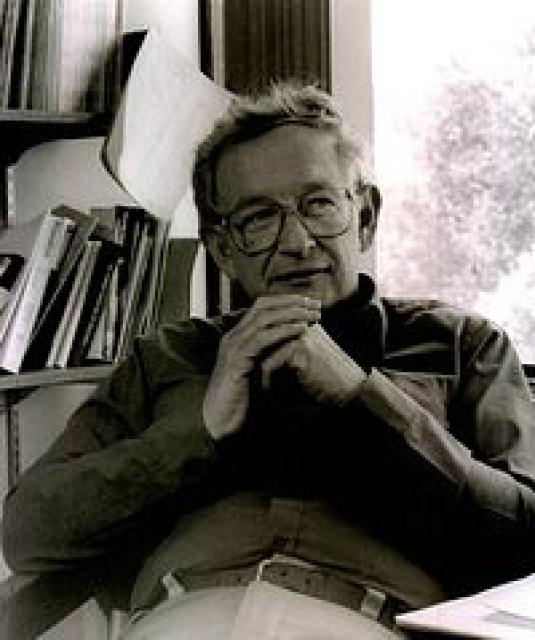
Filip Anderson
 USA
USABiography of Philip W. Anderson
Philip W. Anderson is an American theoretical physicist. He was born in Indianapolis, Indiana and later lived in Urbana, Illinois, where his father, Harry Warren Anderson, was a professor of plant pathology at the University of Illinois. His mother, Elsie (nee Osborne) Anderson, was the daughter of a mathematics professor, and many family friends were teachers. Anderson had a happy childhood and adolescence, spending his happiest hours on family trips, boating, camping, and singing around the campfire. After finishing high school, Anderson attended Harvard University and graduated with a bachelor's degree in electronic physics in 1943. Due to World War II, he had to postpone his graduate studies and served as a senior petty officer in the US Navy. For the next two years, he worked as a radio engineer at the Naval Research Laboratory in Washington, D.C., where he designed antennas. After the war, he returned to Harvard and completed his master's and doctoral degrees in 1947 and 1949, respectively. His research focused on the applications of quantum mechanics to explain the broadening of spectral lines.
Contributions to Physics
Anderson discovered that the latest mathematical methods of quantum field theory could be used to explain how the line broadening in a spectrum depends on gas pressure. His results were among the first quantitative characteristics of line broadening as a function of intramolecular interactions. Some of his methodological approaches are still widely used today. Anderson then joined Bell Laboratories, one of the leading research centers in solid-state physics at the time. He continued his research on line broadening and also investigated the magnetic properties of solids under the guidance of Charles Kittel. His work explained the properties of magnetic materials, such as ferrites and antiferromagnetic oxides. In 1961, using another quantum model, Anderson explained the magnetic behavior of individual magnetic ions in non-magnetic materials, such as iron ions in aluminum.
This work sparked his interest in superconductivity, the complete absence of electrical resistance in certain materials at very low temperatures. Anderson, along with other scientists at Bell Laboratories, conducted further theoretical and experimental research in this area, linking superconductivity with other properties of superconducting materials. Anderson also developed what he called the "dirty superconductors theory," which explained the effects of impurities in superconductors. In 1960, working with Pierre Morel, he predicted the existence of an anisotropic phase in superconducting liquid helium. Twelve years later, this phenomenon was experimentally confirmed by Douglas Osheroff and his colleagues at Bell Laboratories. Anderson's contributions to understanding the phenomenon of superfluidity in liquid helium were significant.
In 1962, working with J. M. Rowell, Anderson experimentally confirmed the Josephson effect, which predicted the "tunneling" of electrons through a thin insulating barrier. His final work on spontaneous symmetry breaking is highly cited in the field of elementary particle physics.
Later Career and Recognition
In addition to his research, Anderson also had teaching positions at various universities. He taught as a visiting lecturer at the University of Tokyo in 1953-1954 and developed a passion for Japanese culture and the game of Go. During this time, he met English physicist Neville Mott, who invited him to the Cavendish Laboratory at the University of Cambridge. There, Anderson had frequent discussions with Mott about electron behavior in amorphous (non-crystalline) materials.
Anderson's work on conductivity in amorphous materials laid the groundwork for the development of amorphous semiconductors, which are used in devices such as solar panels and photocopiers today. From 1967 to 1975, Anderson divided his time between Cambridge and Bell Laboratories. In 1974, he became the Deputy Director of Bell Laboratories and left his position at Cambridge to become a half-time professor of physics at Princeton University in 1975.
In 1977, Anderson, Mott, and Van Vleck shared the Nobel Prize in Physics for their fundamental theoretical research on the electronic structure of magnetic and disordered systems. Anderson received numerous other awards and honors throughout his career, including the Oliver E. Buckley Prize in Solid State Physics from the American Physical Society, the Danny Heineman Prize of the Göttingen Academy of Sciences, the Guthrie Medal from the London Physical Society, and the National Medal of Science from the National Science Foundation.
Personal Life
Philip W. Anderson continues to teach at Princeton University, where he lives with his wife Joyce (formerly Goswitz). They have one daughter. In his free time, Anderson enjoys gardening, hiking, and studying biology and Romanesque architecture.