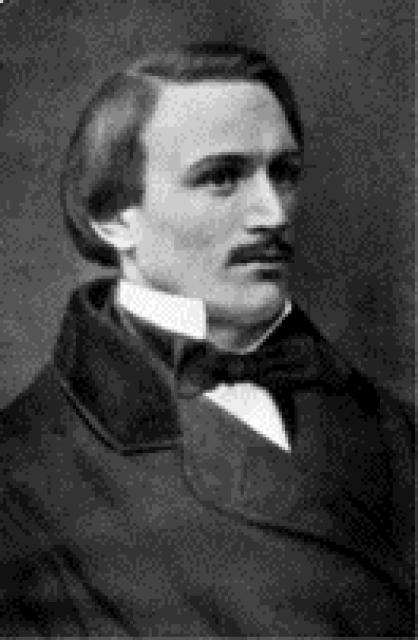
Francis Edward Bache
 Great Britain
- Biography of Francis Edward Bache
- Early Education and Musical Training
- Continued Education and Musical Achievements
- Final Years and Legacy
Biography of Francis Edward Bache
Francis Edward Bache was an English organist and composer. He was born on September 14, 1833, in Birmingham. He was the eldest of seven children of Samuel Bache, a prominent Unitarian minister.
Early Education and Musical Training
Bache received his early musical education under the guidance of James Stimpson, the city organist in Birmingham, and violinist Alfred Mellon. He also received education at his father's school. Bache showcased his violin skills at the Birmingham Festival in 1846. In 1849, he traveled to London to study composition privately with William Sterndale Bennett, a renowned representative of the English Romantic composer school. Bache continued his studies with Bennett for three years. In October 1850, Bache obtained the position of organist at All Saints, Gordon Square church.
Continued Education and Musical Achievements
While still studying under Bennett, Bache composed several concertos, overtures, two dramatic works, a string quartet, a piano trio, and numerous piano pieces. He made his concert debut in Keighley, Yorkshire, on January 21, 1851. In June 1852, during a performance of his own unpublished piano concerto's "Allegro," music critic Henry Chorley remarked that English art had long awaited a composer like Francis Edward Bache.
In November 1851, Bache moved in with Mellon, who was then residing in London. In 1852, he received a commission from "Addison, Hollier and Lucas" for several light piano pieces, a genre in which he excelled. In 1853, upon the recommendation of Sterndale Bennett, Bache continued his musical education in Leipzig, Germany. There, he studied under Moritz Hauptmann and developed the prevailing prejudices of that time towards the works of Berlioz, Liszt, and Wagner. Interestingly, his younger brother Walter Bache, a successful pianist and conductor, held the opposite view and was a devoted supporter of Liszt and Wagner's music.
After visiting Dresden, Bache returned to London, briefly stopping in Paris in February 1855. In the same year, he participated in the Birmingham Festival and wrote reviews of it for local newspapers. Soon after, Bache suffered a severe tuberculosis attack that had plagued him for several years.
Final Years and Legacy
In early 1856, following medical advice, Bache traveled to Algiers and gave a concert there on March 28. He then journeyed from Paris to Leipzig, arriving in June. He traveled through Dresden and Vienna before reaching Rome in December of the same year. His health deteriorated once again, prompting his return home in June 1857. He spent the following winter in Torquay, a fashionable seaside resort in southern England, where he managed to perform a concert in February 1858. After returning to Birmingham, his illness continued to worsen. Francis Edward Bache passed away less than three weeks after his farewell concert, which took place on August 5. He died on August 24, 1858, at the age of 24.
Despite his young age, Francis Edward Bache left behind a significant body of work. His best-known pieces include piano trios, which enjoyed great success. He also composed two operettas, a piano concerto, a series of published piano pieces, and songs that showcased his promising talent. In 1901, Constance Bache, a renowned pianist, composer, and music educator, published memoirs titled "Brother Musicians." In these memoirs, she shared her recollections of her older brothers, including Francis Edward Bache.