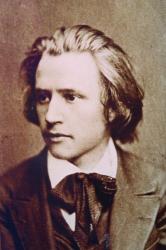
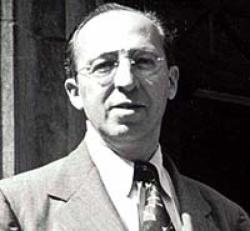
Lev Ornshtein
 USA
USA- Leo Ornstein: A Pioneering Musical Genius
- Early Years and Education
- Emigration and Career in the United States
- Modernist Compositions and European Tour
- Renowned Pianist and Teacher
- Ornstein's Musical Legacy
- Some of his notable compositions include:
Leo Ornstein: A Pioneering Musical Genius
Born in Ukraine in 1895, Leo Ornstein was an American composer, pianist, and teacher of Jewish descent. His early life was immersed in music, with his father being a synagogue cantor and his uncle an acclaimed violinist.
Early Years and Education
Ornstein's prodigious piano skills were noticed at a young age. In 1902, Józef Hofmann, renowned pianist, witnessed his performance in Kremenchug and encouraged him to study at the Saint Petersburg Conservatory. Ornstein briefly attended a school associated with the Imperial Musical Society in Kyiv but returned home due to a family tragedy. Subsequently, in 1904, he enrolled in the Saint Petersburg Conservatory, where he studied composition under Alexander Glazunov and piano under Anna Esipova.
Emigration and Career in the United States
In 1906, Ornstein's family emigrated to the United States and settled in New York. He continued his musical education at the Institute of Musical Art (now Juilliard School), where he studied with Bertha Tapper. In 1911, he gave his first solo recital, showcasing his mastery of Bach, Chopin, and Schumann.
Modernist Compositions and European Tour
Ornstein's interest in composing emerged during his time in the United States, and he embraced modernist techniques, such as the use of clusters. In 1914, he made a pivotal trip to Europe, where he met Ferruccio Busoni and Michel Calvocoressi. He performed his own works as well as compositions by Schoenberg and Bach-Busoni transcriptions in London.
Renowned Pianist and Teacher
Returning to New York in 1915, Ornstein established himself as one of the leading pianists of his time. However, in 1922, he retired from the concert stage and turned to teaching, which he continued until 1953.
Ornstein's Musical Legacy
Ornstein's compositions fall into three distinct periods: experimental early works, mainly for piano, characterized by atonality and dissonance; more conservative pieces influenced by Eastern European music; and late works that combined elements of both previous styles. Many of his instrumental works have programmatic elements.
Some of his notable compositions include:
- "Nocturne" for Piano (1915)- "Three Impressions on Russian Themes" for Violin and Piano (1916)
- "Danse Sauvage" (1913)
- "Suicide in an Airplane" (1913)
- "Three Moods" (1914)
- Piano Quintet (1927)
- Eight Piano Sonatas
Rediscovery and Influence
After years of neglect, Ornstein's music was rediscovered by Vivian Perlis in the 1970s. Despite this partial revival, a significant portion of his creative output remains largely unknown to modern audiences. Nevertheless, Ornstein's pioneering spirit and innovative techniques influenced generations of musicians, making him a significant figure in 20th-century classical music.