Francis Poulenk
 France
- Francis Poulenc: A Self-Taught French Composer and Pianist
- Influences and Membership in "Les Six"
- Vocal and Instrumental Works
- Works for Theater, Film, and Ballet
- Legacy and Death
Francis Poulenc: A Self-Taught French Composer and Pianist
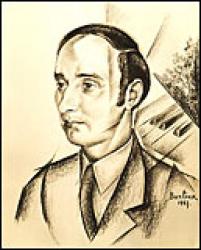
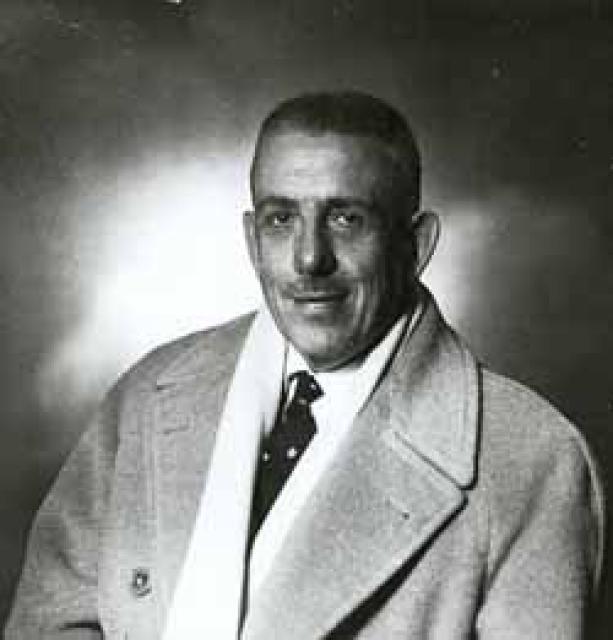
Francis Poulenc (1899–1963) was a French composer, pianist, and critic. He was born on January 7, 1899 in Paris. Poulenc was primarily a self-taught musician, although during his student years, instead of following his parents' strict instructions regarding his education, he successfully used his free time to study piano and composition.
Influences and Membership in "Les Six"
Poulenc, who had an anti-romantic disposition, was influenced by Erik Satie and in the 1920s, became a member of the famous French group known as "Les Six." Throughout his career, Poulenc remained faithful to the aesthetic program of this group. He continued to compose solid music that rejected the excesses of the Wagnerian-Straussian era, embraced simplicity and naturalness, utilized music hall motifs, and often concealed emotion behind a mask of irony.
Vocal and Instrumental Works
Poulenc frequently set texts by contemporary poets such as Cocteau, Eluard, Aragon, Apollinaire, and Artaud, as well as texts by the 16th-century poet Ronsard. His vocal cycles, "Poems by Ronsard" (Pomes de Ronsard, 1924–1925) and "Gallant Festivities" (Fêtes galantes, 1943), are among his most frequently performed works. Poulenc was an excellent accompanist when performing his own vocal compositions.
Poulenc's brilliant mastery of the piano is reflected in a number of his works for the instrument, such as "Perpetual Movements" (Mouvements perpétuels, 1918) and "Evenings in Nazelles" (Soirées de Nazelles, 1936). However, Poulenc was not just a miniaturist. His repertoire also includes compositions in large forms, such as his "Mass" (1937), witty concerto for two pianos with orchestra (1932), concerto for organ with orchestra (1938), and other successful choral and instrumental cycles.
Works for Theater, Film, and Ballet
Poulenc also composed music for theater, film, and ballet. He wrote two operas, "The Breasts of Tiresias" (Les Mamelles de Tirésias, 1944) and "Dialogues of the Carmelites" (Les Dialogues des Carmélites, 1957), as well as a monodrama, "The Human Voice" (La voix humaine, 1959).
Legacy and Death
Francis Poulenc passed away in Paris on January 30, 1963. His unique style, which blended elements of neoclassicism, surrealism, and popular music, made him one of the most significant composers of the 20th century. His compositions continue to be widely performed and admired for their charm, wit, and emotional depth.