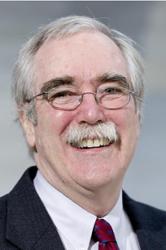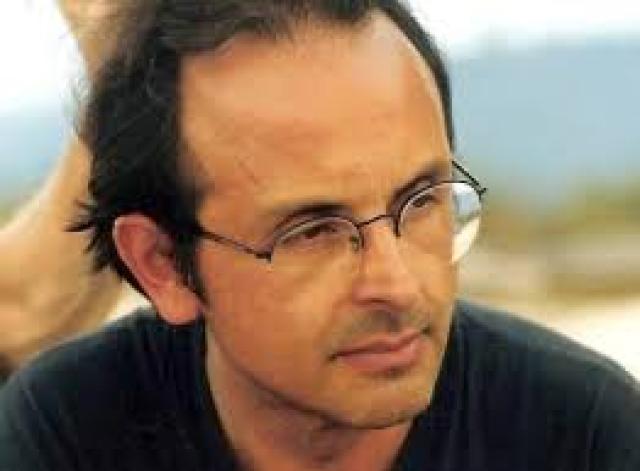
Francisco Varela
 Chile
Chile- Francisco Varela: A Pioneering Scientist and Philosopher
- Influences and Studies
- Academic Career and Research
- Institute for Mind and Life
- Later Years and Contributions
- Legacy and Impact
- Awards and Recognition
- Selected Publications
- In Memoriam
Francisco Varela: A Pioneering Scientist and Philosopher
Early Life and EducationFrancisco José Varela García (September 7, 1946 - May 28, 2001) was born in Talcahuano, Chile. He received a classical education at the German Liceo in Santiago and studied at the Medical School of the Catholic University of Chile (1964-1966) and the Faculty of Science of the University of Chile (1966-1967), where he earned his Master's degree (MS) in Biology in 1967.
Influences and Studies
As a student, Varela developed a keen interest in philosophy, studying the works of Aristotle, Ortega y Gasset, Sartre, and leading phenomenologists such as Husserl, Heidegger, and Merleau-Ponty. In January 1968, following his mentor Humberto Maturana, Varela entered Harvard University, where he earned a PhD in Biology in June 1970, completing a doctoral dissertation on the information processing of the insect compound eye under the guidance of future Nobel laureate Torsten Wiesel.
Academic Career and Research
Autophagy TheoryUpon graduating from Harvard, Varela rejected offers for research positions in prestigious American universities and returned to Santiago on September 2, 1970, as an Assistant Professor in the Faculty of Science of the University of Chile. Soon after his return, Varela and Maturana proposed the theory of autopoiesis. This theory introduced a novel approach to understanding living systems as self-organizing and maintaining their own identity.
Institute for Mind and Life
Varela's interest in Buddhism led him to explore the relationship between Western science and Buddhist thought. In the late 1970s, he organized events at Naropa University to facilitate discussions between scientists and Buddhists. In 1985, he played a key role in establishing the Mind and Life Institute, an organization dedicated to fostering dialogue between these two disciplines.
Later Years and Contributions
In 1986, Varela settled in Paris, where he worked at the Institute of Neurosciences and as Professor of Cognitive Science and Epistemology at the Center for Applied Epistemological Research (CREA) at the École Polytechnique. From 1988 until his death, he served as Director of the Laboratory of Cognitive Psychophysiology at the National Center for Scientific Research.
Legacy and Impact
Varela's groundbreaking work in neuroscience, philosophy, and the dialogue between science and Buddhism earned him worldwide recognition. His ideas continue to influence researchers and scholars in various disciplines, including cognitive science, artificial intelligence, family therapy, sociology, and philosophy.
Awards and Recognition
2004: Francisco J. Varela Awards for Contemplative Research, established by the Mind and Life Institute to honor his contributions to contemplative science
Selected Publications
Varela, F. J., Maturana, H. R., & Thompson, E. (1991). The embodied mind: Cognitive science and human experience. Cambridge, MA: MIT Press.
In Memoriam
Francisco Varela passed away on May 28, 2001, leaving behind a legacy as a visionary thinker and pioneer in the field of science and consciousness studies.