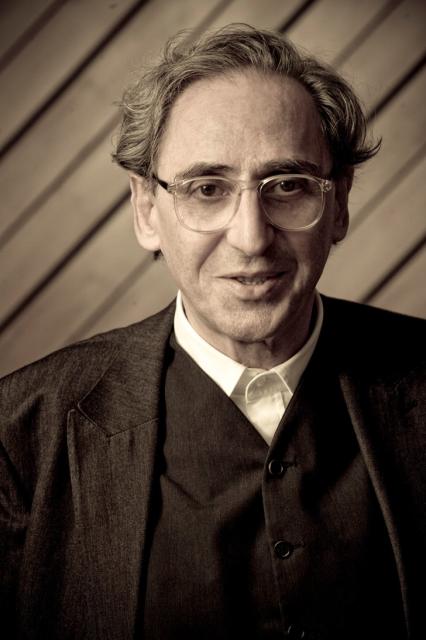
Franco Battiato
 Italy
ItalyBiography of Franco Battiato
Franco Battiato is an Italian musician, singer, composer, songwriter, film director, and artist. Born on March 23, 1945, in Riposto, Catania, Sicily, Francesco 'Franco' Battiato began his musical career at the age of 20 when he moved to Milan and signed his first music contract in 1968. He achieved some success with the romantic song "È l'amore" and continued to create pop music.
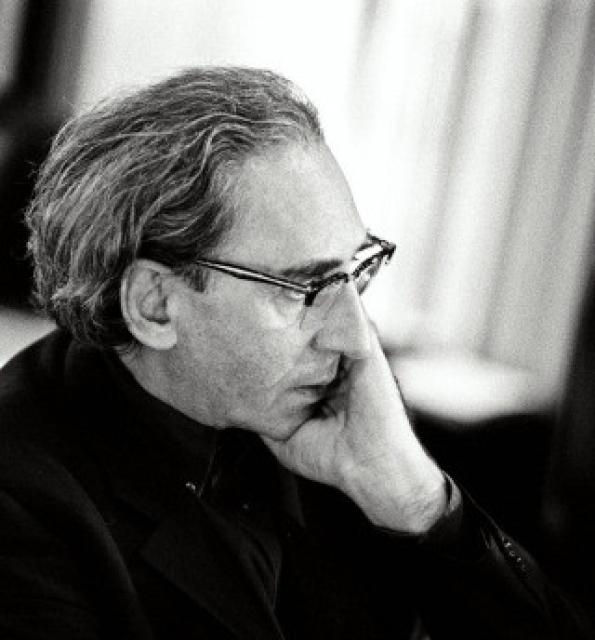
In 1970, Battiato met musician-experimenter Juri Camisasca and began working with the Italian psychedelic progressive rock group, 'Osage Tribe'. Alongside his solo projects, Battiato released the "scientific-fantastic" single "La convenzione" in 1971, which is considered one of the best progressive rock compositions of the 70s. He then transitioned to experimental electronic music, recording a series of albums that were not commercially successful at the time but have since gained recognition among collectors worldwide.
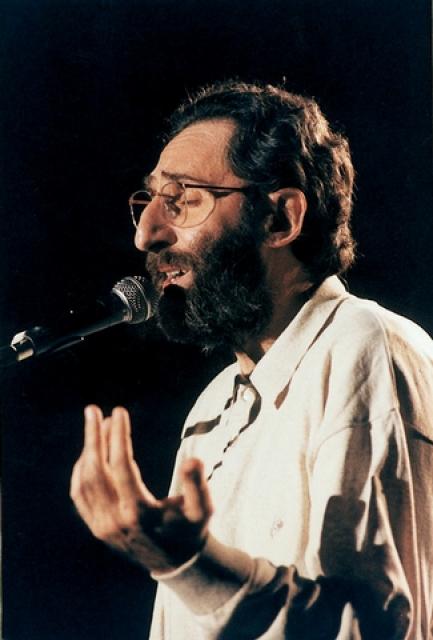
Battiato's music evolved into more experimental and unconventional styles, incorporating influences from concrete music and musical minimalism. His albums "Fetus" (1971), "Pollution" (1972), "Sulle Corde di Aries" (1973), "Clic" (1974), and "M.lle Le Gladiator" (1975) represent these directions. "Clic," in particular, bears resemblance to the electronic music of American minimalist composer Philip Glass and the German rock group 'Can.'
In 1975, Battiato signed with the label 'Dischi Ricordi' and released albums such as "Battiato" (1975), "Juke Box" (1976), and "L'Egitto prima delle sabbie" (1977), which earned him the Karlheinz Stockhausen Prize in contemporary music.
The 1980s marked a shift for Battiato into disco and electronic rock, bringing him national recognition and commercial success. Signing with 'EMI,' he focused on writing music that appealed to a wider audience. His album "La voce del padrone" (1981) became the first Italian album to sell over one million copies. Subsequent albums featured lyrics in English, Spanish, and Arabic, exploring philosophical and religious themes, solidifying Battiato's reputation as one of the country's most intellectual musicians.
From 1987 onwards, Battiato composed several classical operas. Twenty years ago, he began experimenting with painting under the pseudonym Süphan Barzani and later using his own name. In 2003, Battiato released his first film, "Perduto amor," for which he also composed the soundtrack. The film won the Italian Silver Ribbon for Best Directorial Debut. However, his next film, "Musikanten" (2005), an experimental work about the last four years of Beethoven's life, received criticism from critics.
In 2004, Battiato became the host of the program "Bitte, keine Reclame," which introduced viewers to various aspects of world culture. He is not married and was deeply attached to his mother, who passed away in 1994. Battiato enjoys spending his free time in solitude in Milo, a small town at the foot of Mount Etna.
In 1999, Battiato released the album "Fleurs," featuring cover versions of Italian love songs. He repeated this experiment three years later with the album "Fleurs 3." However, "Fleurs 2" was only released in November 2008 for unknown reasons.


