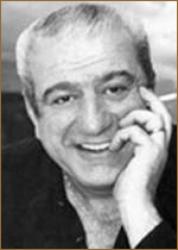
Francois-Auguste Gevaert
 Belgium
- Biography of François Auguste Gevaert
- Early Career and Recognition
- International Experiences
- Director of the Grand Opera and Later Career
- Musicological Works and Legacy
Biography of François Auguste Gevaert
François Auguste Gevaert was a Belgian composer, educator, scholar, and music activist. He was born into a baker's family and went on to become one of the most influential figures in Belgian music history. Gevaert showed talent for music from a young age and went on to study composition under Martin Joseph Mengal at the Conservatoire de Gand, where he graduated in 1847.
Early Career and Recognition
In the same year of his graduation, Gevaert won the Belgian equivalent of the Rome Prize for his cantata "King Lear," beating Jacques-Nicolas Lemmens. He also worked as an organist at a local Jesuit church in Ghent. Gevaert's early career saw him compose and stage two operas, "Hugues de Somerghem" and "La comédie à la ville," in Ghent between 1848 and 1849.
International Experiences
In 1849, Gevaert left Belgium and lived and worked in Paris, Spain, and Italy. During his time in Spain, he composed "Fantasia sobre motivos españoles," showcasing his fascination with Spanish music. Gevaert returned to Paris in 1853, where he focused primarily on composing operas. His greatest successes came with "Quentin Durward" (1858) and "Le Capitaine Henriot" (1864).
Director of the Grand Opera and Later Career
From 1867 to 1870, Gevaert served as the director of the Paris-based Grand Opera. However, due to the Franco-Prussian War, he returned to Belgium in 1871 and became the director of the Brussels Conservatory until his death. Gevaert's contributions as an educator were notable, with Isaac Albéniz being among his students.
Musicological Works and Legacy
Gevaert made significant contributions to musicology with his two-volume work, "Histoire et théorie de la musique de l'antiquité" (1875-1881), which explored the history and theory of ancient music. He also wrote influential treatises on orchestration, including a revised edition of "Traité general d’instrumentation" (1885) and "Cours méthodique d'orchestration" (1890). Gevaert's interest in Baroque music led him to reorchestrate early works, such as Jean-Philippe Rameau's opera "Castor et Pollux."
François Auguste Gevaert's contributions to music were widely recognized, and he was elected to the Prussian Academy of Arts in 1895. In 1907, he was awarded the title of Baron. Following his death, a street in Brussels was renamed in his honor, reflecting his lasting impact on Belgian music.