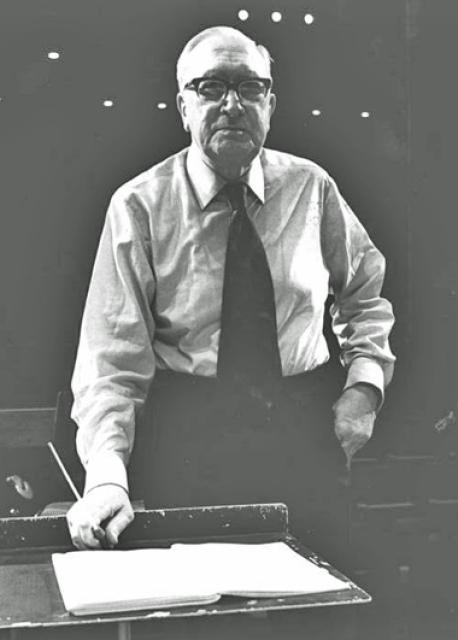
William Turner Walton
 Great Britain
Biography of William Walton
William Walton was an English composer and conductor. He was born in Oldham, Lancashire, England in 1902. His father, Charles Alexander Walton, was a musician and vocal instructor, and his mother, Louisa Maria, was also a singer.
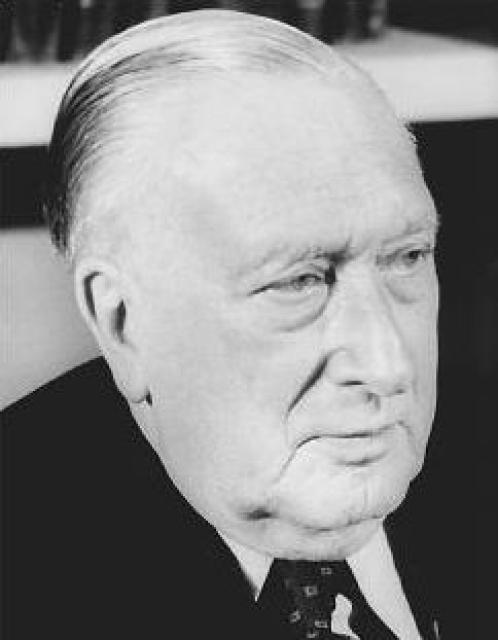
In his childhood, William sang in church and played the violin and piano, although he never pursued these studies to completion. However, his obvious musical talent was recognized, leading to his enrollment in Christ Church Cathedral School. Later, he attended Christ Church, Oxford, where he continued to impress his teachers with his exceptional abilities.
During his time at college, William became acquainted with the Sitwell siblings, known for their unconventional views on art and literature. He collaborated with Edith and her brother Osbert to create "Belshazzar's Feast." Although he did not receive an academic degree, Walton benefited from the patronage of the Sitwells and even lived with them.
Walton's musical education was not purely academic, as he largely taught himself. At the age of 16, he composed his first piece, a piano quartet. In 1922, he wrote his "String Quartet," followed by the "Toccata for Violin and Piano" in 1923.
Starting from 1922, William spent a significant amount of time outside of England, particularly in Switzerland and Italy. It was during this period that he composed his well-known works such as the "Viola Concerto," "Belshazzar's Feast," and the renowned "First Symphony." One of his notable works from this time was the ironic piece "Façade" in 1923, accompanied by instruments such as piccolo, clarinet, bass clarinet, saxophone, trumpet, cello, and percussion.
In 1926, Walton transformed "Façade" into a comedic ballet, incorporating popular melodies by English composers of the time. From the mid-1930s, he also began composing music for films, including "As You Like It" (1936), "Dreaming Lips" (1937), and "Major Barbara," among others.
By the 1930s, Walton had achieved some financial independence and purchased his own home in London. In 1939, he created his famous "Violin Concerto" for Jascha Heifetz, which premiered in December of that year.
During World War II, Walton did not serve in the military but contributed to war films and worked as an ambulance driver. He admitted to being a terrible driver. His home was destroyed during the war. In 1941, he composed "Scapino" for the 50th anniversary of the Chicago Symphony Orchestra.
His relationship with the Sitwells cooled in the 1930s, leading William to explore new acquaintances and relationships. He engaged in a lengthy affair with Imma von Doernberg, a young German baroness, from the late 1920s until 1934. He then entered into a relationship with Alice, Viscountess Wimborne, who was 20 years older than him, until her death in 1948. In the same year, William married Susana Gil Passo, who was 24 years younger than him. They settled on the island of Ischia in the Tyrrhenian Sea.
In 1954, Walton composed the opera "Troilus and Cressida," and in 1967, he wrote the one-act play "The Bear" based on Anton Chekhov's work.
In 1978, Walton was elected an honorary member of the American Academy and Institute of Arts and Letters. He was knighted in 1951 and received the Order of Merit in 1968.
Walton's compositions encompass a variety of genres, including orchestral, choral, chamber, and ceremonial music. He also had a deep love for jazz, which can be heard in many of his works. His most successful and acclaimed pieces include "Façade," "Belshazzar's Feast," and the "First Symphony."
Sir William Walton passed away on March 8, 1983, at the age of 80. Although his talent was initially underestimated, his true greatness as a composer was recognized after his death. Today, his works are frequently performed and recorded, showcasing his significant contribution to English music.


