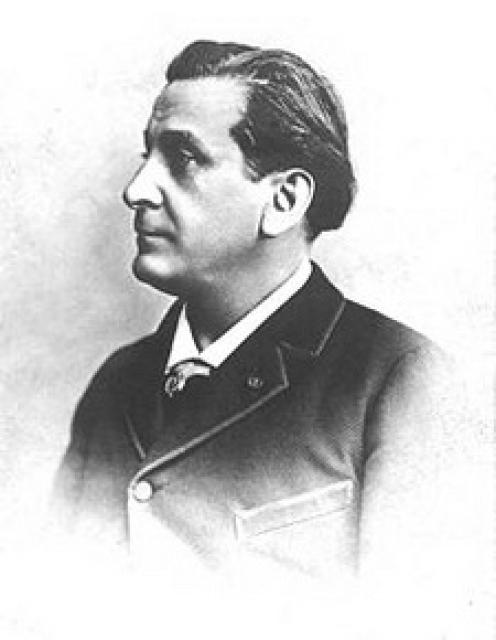
Francois Coppee
 France
- Early Life and Education
- Literary Debut
- Dramatic Success
- Social and Political Activism
- Poetic Style and Influences
- Influence and Legacy
Early Life and Education
François Coppée was born into a civil servant's family in Paris. After attending the Lycée Saint-Louis, he entered the Ministry of War as a clerk. During this time, he began writing poetry and joined the Parnassian group, known for its emphasis on form and objectivity.
Literary Debut
Coppée's first collection of poems, "Reliquaire" (1866), received favorable critical acclaim. He made his debut as a playwright in 1869 with the play "Le Passant" ("The Passerby"), which enjoyed considerable success. The Franco-Prussian War (1870-1871) heavily influenced his early works, including the verse dramas "Fais ce que dois" (1871) and "Les bijoux de la délivrance" (1871).
Dramatic Success
As Coppée gradually distanced himself from poetry, he gained recognition as a playwright and novelist. In 1878, he was appointed as the Archivist of the Comédie-Française, a position he held until his election to the Académie Française in 1884. Among his notable historical dramas are "Les jacobites" (1885).
Social and Political Activism
In his later years, Coppée returned to the Catholic faith and became involved in French nationalist movements. He headed the "League of the French Fatherland" from 1899-1902 and supported the Dreyfusard cause during the Dreyfus Affair. Despite his initial popularity, Coppée's work faced mockery from the "poètes maudits" (accursed poets) and fell into obscurity.
Poetic Style and Influences
Coppée's poetry is characterized by a didactic patriotism, sensitivity, and focus on everyday life. He became known as the "poet of the poor" due to his sympathetic portrayals of ordinary people. Many of his poems exhibit the musicality, structural clarity, and expressiveness that were hallmarks of the Parnassian school.
Influence and Legacy
Coppée's works influenced numerous composers of his time, including Delibes, Massenet, Saint-Saëns, and Chaminade. His poem "The Echo" was set to music by Nikolai Rimsky-Korsakov. Despite his initial popularity, Coppée's work was criticized in later years for its perceived "bourgeois" and "reactionary" nature.