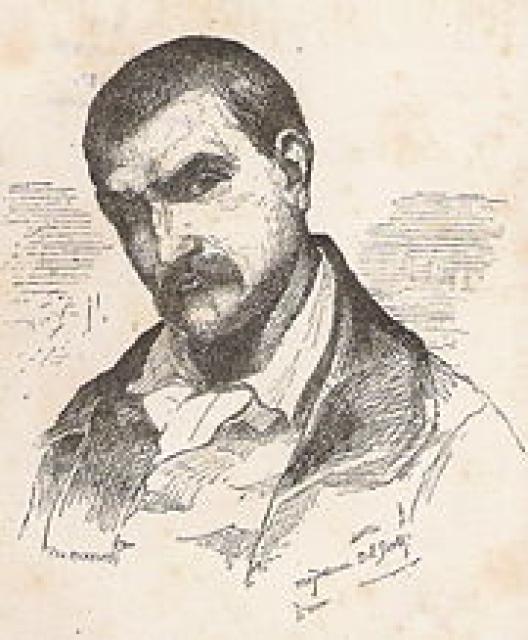
Francois Delsarte
 France
Biography of François Delsarte
François Delsarte was a French singer, vocal coach, and theoretician of the performing arts. Born into a poor family in Paris, he developed a passion for music at a young age. Although he applied to the Conservatory, he did not pass the competition. However, he received praise from Maria Malibran. In 1829, he auditioned at the Opéra-Comique and was immediately accepted onto the stage.
In 1834, Delsarte lost his voice. However, he became fully absorbed in the idea of "staging the aesthetics of the human body," which focused on expressiveness based on scientific principles. In 1839, the famous Delsarte courses were established. Among his students and listeners were Malibran, Rachel, the English tragedian Macready, Pasca, and Henriette Sontag. Notable attendees of his courses included Gounod and Reber. King Louis Philippe invited Delsarte to the palace, and the artist Ingres once said, "We do not know who the King of France is today." Théophile Gautier referred to him as the "musical Talma," while Lamartine called him the "supreme orator."
Delsarte received an invitation to America with a proposal to establish a conservatory, but the Franco-Prussian War occurred. He left Paris and returned to his hometown of Solémont in northern France. Before his departure, he managed to dictate several episodes to his two daughters, which were intended as an introduction to a future book. He returned to Paris in March 1871 but unfortunately passed away on July 20, 1871.
Despite not leaving a written account of his system, Delsarte's legacy was preserved by several students, his daughters, and enthusiastic American followers. They collected everything that remained after him, including notebooks, scraps of paper, and notes from others, saving this precious inheritance from oblivion. However, subsequent publications of the Delsarte system, written by other authors, gradually diminished the depth and content of his teachings. It transformed from a system built on a profound philosophical foundation, with scientific consistency and endless possibilities in terms of artistic application, into a "system of aesthetic gymnastics" with the addition of "free dances" in the third generation.


