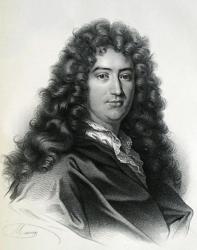
Francois Joseph Lagrange-Chancel
 France
- French Dramatist and Satirist
- Tragic and Lyrical Expressions
- Scandalous Satires: The "Philippiques"
- Escape and Return
- Multiple Editions and Discoveries
- Unpublished Poetry
French Dramatist and Satirist
Jean-Baptiste Lagrange was a renowned French playwright and satirist known for his incisive wit and politically charged works.
Tragic and Lyrical Expressions
Lagrange penned numerous tragedies, including "Oreste et Pylade" (1697) and "Amasie" (1701), which explored themes of love, betrayal, and the human condition. He also composed operas such as "M?duse" (1702) and "Cassandre" (1706), showcasing his musical and lyrical abilities.
Scandalous Satires: The "Philippiques"
One of Lagrange's most infamous contributions was his series of "Philippiques," scathing satires that mercilessly targeted the French Regent, Louis de Bourbon, his daughters, and their favorites. These writings earned him the ire of the authorities, leading to his imprisonment on the Isle of Sainte-Marguerite.
Escape and Return
Two years later, Lagrange managed to escape prison and flee abroad. Upon the Regent's death, he was permitted to return to France. His literary works were posthumously published as "Oeuvres" in 1758.
Multiple Editions and Discoveries
Over the years, various editions of Lagrange's "Philippiques" have been published. While the 1858 edition by de Leseure was initially considered comprehensive, a further discovery in 1886 by Diancourt revealed another previously unknown "Philippique."
Unpublished Poetry
In 1878, Lagrange's previously unpublished "Po?sies in?dites" were brought to light, offering a glimpse into his lesser-known lyrical abilities.
Lagrange's legacy as a playwright, satirist, and political commentator continues to endure, showcasing the transformative power of language and the enduring relevance of his themes.