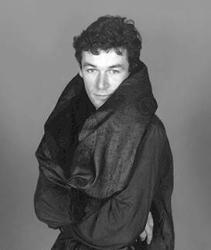
Frank Andersen
 Denmark
- Biography of Frank Andersen
- Premiere of "Napoli" in Moscow
- The Choice of "Napoli"
- Challenging the Dancers
- The Experience of Dancing in a Kilt
- Utilizing Pantomime in "Napoli"
- Leadership and the Importance of Clarity
- A Life of Responsibility and Freedom
- Ambassador of Goodwill
- First Impressions of Russia
- The Name Andersen
- The Queen's Love for Ballet
- Ballet Lessons for Royalty
- Commander of the Danish Flag
- Sense of Humor
Biography of Frank Andersen
Frank Andersen, a renowned dancer and choreographer, was born in Copenhagen in 1953. He joined the Royal Danish Ballet (RDB) in 1971, where he danced leading roles in classical and contemporary repertoire. He began his leadership career as the director of August Bournonville's World Tour (1976-1985). Andersen has twice served as the director of RDB (1985-1994; 2002-2006) and was also the director of the Royal Swedish Ballet (1995-1999). He is well-known for his choreography of Bournonville's ballets. Among his recent works are "La Sylphide" at the Estonian National Opera and "Napoli" at the Cuban National Ballet.
Premiere of "Napoli" in Moscow
On March 27th, the scorching Italian summer will come to Moscow as the Stanislavsky and Nemirovich-Danchenko Moscow Music Theatre presents the premiere of the ballet "Napoli". This masterpiece by August Bournonville, dating back to 1842, will be choreographed by the famous dancer and choreographer, Frank Andersen. The charm of the Danish guest has been praised by the critic from "Izvestiya".
The Choice of "Napoli"
When asked why he chose "Napoli" for the Stanislavsky Theatre, Andersen replied that it is a fascinating and uplifting story. Additionally, "Napoli" is a grand ballet that involves a large number of people. In Russia, he knows that audiences love stories and appreciate grand productions.
Challenging the Dancers
Andersen believes that "Napoli" will provide a new benchmark and a great opportunity for the dancers to improve. From Bournonville's ballets, they are already familiar with "La Sylphide". While Andersen also loves this ballet, he believes that constantly performing the same role can become monotonous and even deadly.
The Experience of Dancing in a Kilt
When asked about the experience of dancing in a kilt in "La Sylphide", Andersen replied that he did not face any difficulties. The only challenge was satisfying the curiosity of women who wanted to know what was underneath the kilt.
Utilizing Pantomime in "Napoli"
In "Napoli", there is a significant amount of pantomime. Andersen approaches pantomime by emphasizing naturalness, just like in real life. He tells the dancers to imagine themselves walking down Tverskaya Street in Moscow and meeting someone they know. They engage in a conversation expressing joy, admiration, and even offering coffee. It is unnecessary to mimic a traffic controller at an intersection to convey these emotions.
Leadership and the Importance of Clarity
Andersen believes that a good company is only as good as its weakest dancer. He encountered challenges that were not related to technical skills but rather to the dancers' understanding of his expectations. It is crucial for him that every dancer knows what they are doing and why. Working at the Stanislavsky Theatre, Andersen follows the Stanislavsky system: he explains the overall objective first and then provides specific instructions for each participant in the performance.
A Life of Responsibility and Freedom
Andersen enjoys alternating between periods of responsibility and freedom. He spent 26 years as a director and enjoyed being involved in the theatrical construction process. As a choreographer, he has discovered remarkable things during his travels around the world. For example, he did not expect Vietnam to have such a talented ballet company. Despite being a poor country, Vietnam has had a ballet company for 49 years, and their theater in Hanoi is an exact replica of the Paris Opera House. Andersen also loves China, where he senses the flow of history. Similar emotions arise when he sees the Kremlin, the chimes, and Saint Basil's Cathedral on Red Square.
Ambassador of Goodwill
When told that he has a state-like mindset, Andersen feels flattered. He considers himself an ambassador of goodwill. Five hundred and fifteen years ago, Denmark and Russia signed a treaty of friendship and cooperation, and they have never been at war. "Napoli" is another brick in the bridge of friendship between Russia and Denmark.
First Impressions of Russia
Andersen's first impressions of Russia are connected to dance. In 1973, he visited Leningrad with the Royal Danish Ballet and watched performances by the Kirov Ballet. He was amazed by the dancing of Mikhail Baryshnikov and Yuri Soloviev. Inspired, he decided to take a training course at the Kirov Theatre. After six months of saving money, he arrived for an internship in February 1974. He trained in the same class as Baryshnikov and Soloviev, which was a dream come true. Baryshnikov stayed in Canada in June, while Andersen returned home. Since then, they have maintained a close friendship. Last August, Baryshnikov visited Copenhagen, and they had dinner together. Andersen noticed that Baryshnikov had become slightly shorter since 1973 but hadn't lost any of his charm.
The Name Andersen
Andersen is often asked if he is related to Hans Christian Andersen, to which he jokingly says he wishes he was. In Denmark, Andersen is as common as Ivanov in Russia. While it is nice to feel like part of one big family, Andersen believes that for an artistic career, one needs a more extraordinary name. Therefore, his son, Sebastian (a soloist with the Royal Danish Ballet), carries his mother's surname, Kloborg.
The Queen's Love for Ballet
Andersen confirms that Queen Margrethe II of Denmark is a frequent visitor to the ballet. As the patroness of the Royal Danish Ballet, ballet is not just an honorary duty but also her passion. Andersen recalls a festival dedicated to Bournonville, where there were nine performances, and the queen attended every one of them. On one occasion, she had to leave for the opening of an exhibition in Paris, but she returned to Copenhagen in the evening for the ballet.
Ballet Lessons for Royalty
When asked if anyone else from the royal family takes ballet lessons, Andersen reveals that Queen Margrethe II has been taking classical dance lessons from his wife, Eva, for the past 25 years. Eva, who is currently in Moscow assisting Andersen with the production, believes that the queen is graceful in her dance and has beautiful hands. Andersen continues to be amazed by their royal patroness.
Commander of the Danish Flag
Andersen proudly states that he is a Commander of the Danish Flag, which is the highest knighthood in Denmark. Only a thousand people in Denmark hold this title. However, he does not attribute this honor solely to his own achievements but considers it recognition of the work of the entire ballet company.
Sense of Humor
Andersen admits to having a great sense of humor and a love for all kinds of jokes. He finds the character Puck from "A Midsummer Night's Dream" particularly relatable. Although not everyone appreciates his humor, especially his dark humor, in Sweden, he had to defend himself by saying, "Stop, guys, don't beat me up, I was just joking!" Thankfully, in Russia, he is understood.