
Frank Darabont
 USA
USA- Frank Darabont: A Master of Stephen King Adaptations
- From Screenwriter to Director
- Continued Success and Television Work
Frank Darabont: A Master of Stephen King Adaptations
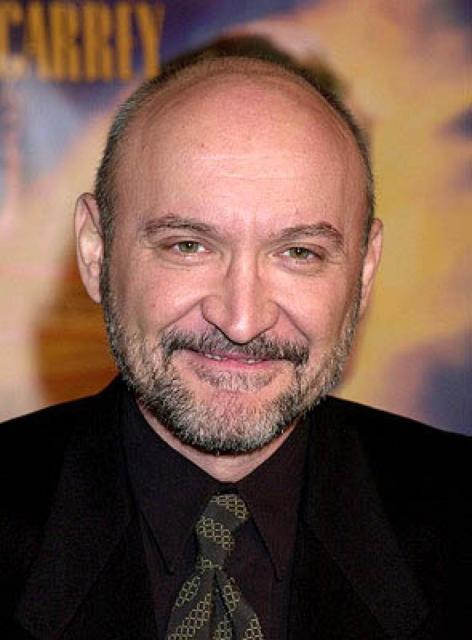
Adapting the works of the great and terrifying Stephen King is no easy task. Most directors who attempted to bring his stories to the screen faced complete failure. The reason lies, undoubtedly, in the complex psychological subtext that permeates all of King's works. Only one director truly understood this, and that was Frank Darabont - a filmmaker who was able to faithfully recreate the world of Stephen King on screen. Frank Darabont was born on January 28, 1959, in the French town of Monbéliard. His parents, who lived in Hungary, left the country during the 1956 revolution. When Frank turned five, his family moved to the United States and settled in Los Angeles. Darabont became interested in filmmaking at the age of twenty. He started writing screenplays and making his own amateur films. In 1983, his short film "The Woman in the Room," based on a story by Stephen King, was released. The young director's debut was successful, as the film made it to the semifinals of the Academy Awards. However, it was only presented to a wide audience three years later, as part of the television project "Stephen King's World of Horror."
From Screenwriter to Director
Prior to embarking on his directing career, Frank Darabont had a successful stint as a screenwriter. He contributed to the scripts of films such as "The Blob," "A Nightmare on Elm Street 3," and "The Fly II." He was also one of the creators of the television movie "Black Cat Run" and the series "Tales from the Crypt." It was during this period that he developed a passion for horror films, which remained a priority in his work to the present day. In 1990, Darabont released his first feature film, "Buried Alive," which had a modest budget of two million dollars. Despite having a decent screenplay, the film went unnoticed and did not generate any interest in the director. Frank Darabont's acquaintance with Stephen King occurred in 1983 when he adapted "The Woman in the Room." The novelist liked the film, and they developed a friendly relationship, which they maintained primarily through correspondence. It is known that King always helped young independent filmmakers. Darabont had a desire to make a film based on the novella "Rita Hayworth and Shawshank Redemption," and King sold him the rights for just one dollar. "The Shawshank Redemption" (1994) exceeded all expectations. This prison drama, about the incredible power of will and the thirst for life, became the most highly anticipated premiere of 1994 and gained immense popularity. This was also attributed to the brilliant performances of Tim Robbins and Morgan Freeman, who received several prestigious film awards. The film was nominated for seven Oscars, although it did not win any. As of 2014, the film holds leading positions in the IMDb's list of the "250 Best Films."

Continued Success and Television Work
After such success, Frank Darabont was hailed as a leading Hollywood director. Offers poured in one after another, but the newly established director did not rush to accept them. He had thoughts of making several more films based on Stephen King's works. For five long years, Darabont worked on his next project. Finally, in 1999, the film "The Green Mile" was released, which, if not overshadowing, was certainly on par with "The Shawshank Redemption." Most critics hailed the film as a masterpiece and were outraged that it did not receive any Oscars. Once again, the film was based on a novel by King, and the central theme revolved around life in prison walls. However, this time it was a story not about the all-encompassing power of freedom, but about the concepts of good and evil. The film is considered one of Tom Hanks' best performances, as he brilliantly portrayed the role of a prison guard.

In 2001, Darabont directed the drama "The Majestic," starring Jim Carrey. It did not achieve the same success as his previous works and received mixed reviews from critics. However, Darabont expressed his satisfaction with the film. According to him, it turned out exactly as he had envisioned it: sweet, touching, and slightly strange. Following the first failure, another followed. Critics were skeptical towards the film "The Mist" (2007), based on a novella by King, although it fully recouped its costs at the box office. Undoubtedly, the film did not have the same impact on audiences as Darabont's previous works, but it cannot be considered a complete failure. For several years now, Frank Darabont has been working in television, where he directed the series "The Walking Dead" (2010) and "Mob City" (2013). According to the director, more and more actors and screenwriters are migrating to television, which provides them with consistent work and quality material. He believes that Hollywood has been spoiled by special effects and a careless attitude towards storytelling. However, Darabont has no intention of leaving the big screen. He was one of the screenwriters for the film "Godzilla," which was released in 2014. It is also known that the director had a dream of adapting Ray Bradbury's novel "Fahrenheit 451." However, Darabont has yet to find a producer for this project and has encountered several difficulties. For example, one film studio told him that it was the best screenplay they had ever read but refused to make a film based on it. They believed it was too intelligent, and teenagers, who make up the majority of the audience, would likely not understand the ideas. This situation deeply saddens Frank Darabont. In his opinion, Hollywood intentionally makes people dumb by releasing year after year of empty blockbusters for financial gain. The director believes that the audience should not be underestimated, as they are intelligent individuals, which is why cinema exists in the first place.


