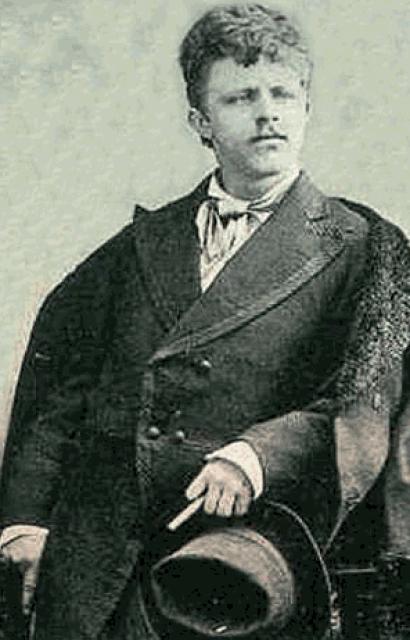
Frank Duveneck
 USA
USA- Frank Duveneck: American Master
- Munich and the Royal Academy
- Return to America and Teaching
- Marriage and Loss
- Cincinnati and Teaching Legacy
- Artistic Evolution
- Recognition and Legacy
Frank Duveneck: American Master
Early Life and EducationFrank Duveneck was born in Covington, Kentucky, to German immigrants. After his father's death, his mother remarried, and he adopted the surname of his stepfather. He began studying painting in Cincinnati before embarking on a journey that would shape his artistic trajectory.
Munich and the Royal Academy
In 1869, Duveneck traveled to Germany and enrolled in the Royal Academy of Arts in Munich under the tutelage of William Chase. His time there exposed him to the European tradition of realism and laid the foundation for his artistic style. After completing his studies, he established his own art studio in Munich.
Return to America and Teaching
In 1873, Duveneck returned to America and taught for two years at the Ohio Mechanics Institute. He returned to Munich in 1875 and made subsequent trips to Paris and Venice. The diverse artistic influences he encountered during these journeys influenced his style and subject matter.
Marriage and Loss
In 1886, Duveneck married his student, Elizabeth Boott, a Bostonian artist living in Florence. However, tragedy struck two years later when Elizabeth passed away from pneumonia in Paris. Devastated by her loss, Duveneck temporarily abandoned painting and turned to sculpture.
Cincinnati and Teaching Legacy
Returning to the United States, Duveneck settled in Cincinnati, where he remained for the rest of his life. He taught at the Cincinnati Art Academy, where he influenced a generation of artists, including J. W. Alexander, Joseph Rodefer De Camp, Kenyon Cox, and John Henry Twachtman.
Artistic Evolution
Duveneck's early works were primarily portraits in a realistic style. After his travels to France and Italy, he began creating landscapes and genre scenes, gradually evolving towards Impressionism. He was known for both his oil paintings and his etchings.
Recognition and Legacy
In 1905, Duveneck was elected to the National Academy of Design. His works were exhibited at the 1915 Panama-Pacific International Exposition in San Francisco. Today, his art continues to be admired for its technical proficiency, atmospheric qualities, and enduring influence on American art.