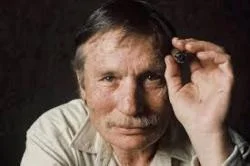
Frank Lucas
- Childhood and Background
- Rise in the Harlem Drug Trade
- Arrest, Conviction, and Cooperation
- The “Cadaver Connection” and American Gangster
- Later Years and Legacy
Frank Lucas turned a Harlem heroin operation into a story that traveled far beyond the streets where it began. The real criminal enterprise was serious enough to bring a lengthy prison sentence and make him a government informant; the most famous details attached to his name, including heroin hidden in the coffins of American soldiers, remain disputed and were amplified by the 2007 film American Gangster.
Childhood and Background
Lucas was born on September 9, 1930, in La Grange, North Carolina. He grew up in the segregated South, in a large family whose circumstances he later described as poor. Accounts of his early life are often drawn from his own recollections, which could be dramatic and were not always independently corroborated. He said that violence and hardship pushed him toward crime, but such personal explanations should be understood as his account of his motives rather than a complete record of his childhood.
He eventually moved to New York and settled in Harlem. There, he became involved in street crime and built relationships within the neighborhood’s underworld. Later profiles connected him with the celebrated Harlem gangster Ellsworth “Bumpy” Johnson, though the extent and nature of Lucas’s association with Johnson have been questioned.
Rise in the Harlem Drug Trade
By the late 1960s and early 1970s, Lucas had become a major heroin dealer in New York. He was associated with a network of relatives and associates sometimes called the “Country Boys,” reflecting the importance of connections to his North Carolina hometown. Lucas sought to control more of the supply chain and reduce reliance on intermediaries. The scale of his operation and the potency of the heroin he sold made him a prominent target for law enforcement.
Lucas later offered expansive accounts of his access to suppliers in Southeast Asia and his efforts to bring heroin directly to the United States. The specific mechanics of the network, and the degree to which he acted independently of established trafficking figures, have been debated. His own interviews helped turn him into a compelling character, but his stories were not all verified by court records or investigators.
Arrest, Conviction, and Cooperation
In 1975, authorities arrested Lucas in a major narcotics investigation. He was convicted in federal court and received a 40-year sentence; separate state charges also exposed him to substantial prison time. He later cooperated with prosecutors, providing information and testimony in other cases. In 1981, after roughly five years in custody, his federal sentence was reduced to time served. Reports at the time said that he and members of his family entered the federal witness-protection program because of the risks created by his cooperation.
The turn from powerful dealer to government witness was one of the sharpest reversals of his life. Cooperation helped him leave prison earlier than his original sentence implied, but it also carried the burden of secrecy and relocation. His criminal record remained central to his public identity even after he was no longer running his former operation.
The “Cadaver Connection” and American Gangster
The most enduring story associated with Lucas was that he smuggled heroin from Vietnam in the coffins of U.S. service members killed in the war. Lucas made versions of this claim in interviews, and the story became a central element of American Gangster, Ridley Scott’s 2007 film starring Denzel Washington as Lucas and Russell Crowe as detective Richie Roberts. The film introduced his name to a much wider audience, but its plot combines dramatization with disputed recollections.
Journalists and people who studied the case have pointed out that the coffin story lacks support in the court record, and a co-author of a book about Lucas said he had found no documentary evidence for it. Lucas himself gave varying accounts. The claim therefore belongs to the contested legend surrounding him, not to the firmly established account of his prosecution. The movie also simplified the investigation and the people involved, prompting criticism from former law-enforcement figures who said the portrayal distorted events.
Later Years and Legacy
Lucas spent his later years largely outside the criminal enterprise that had made him notorious. In 2012, he pleaded guilty to fraud involving a federal disability-benefit check and received probation, according to contemporary reports. His life after prison remained shadowed by the contradictions of his public image: he was both a convicted trafficker whose business harmed communities and a raconteur whose version of events became an unusually durable piece of American crime folklore.
Lucas died in Cedar Grove, New Jersey, on May 30, 2019, at age 88. His legacy is inseparable from the tension between the documented case and the stories told about it. American Gangster preserved his name in popular culture, but the lasting fascination with Lucas also shows how an arrest, a dramatic informant story, and an unverified legend can merge into a single, cinematic biography.