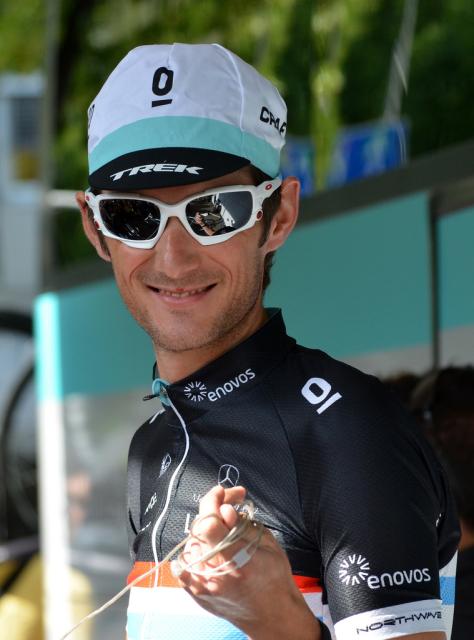
Frank Rene Schleck
 Luxembourg
- Frank Rene Schleck - A Luxembourgish Professional Road Cyclist
- Challenges and Controversies
- Injuries and Performance
- Potential Consequences
Frank Rene Schleck - A Luxembourgish Professional Road Cyclist
Frank Rene Schleck, a renowned cyclist, left the Tour de France due to the use of banned substances. It seems that no Tour de France is complete without a doping scandal, and this time it involved the superstar of modern cycling, Frank Schleck from Luxembourg. The laboratory test revealed traces of the banned diuretic xipamide in his body, leading to his withdrawal from the prestigious race. Despite this, Schleck maintains his innocence.
Challenges and Controversies
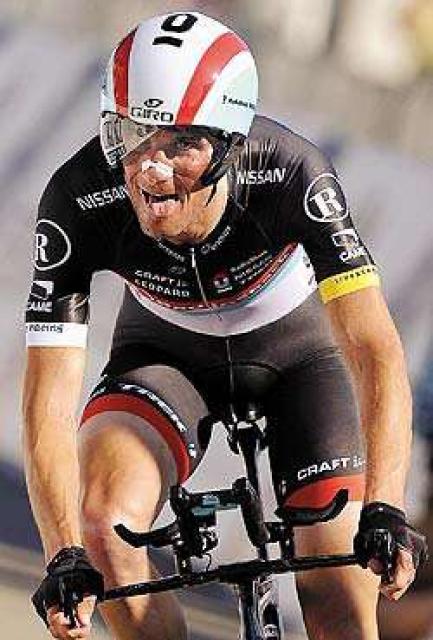
Frank Schleck's elder brother, Andy Schleck, faced numerous problems in the current season. Frank himself felt uncomfortable within the RadioShack-Nissan team, failing to establish a good relationship with the team's manager, Johan Bruyneel. Their conflicts escalated during the Giro d'Italia when Frank injured his shoulder in a fall and decided to withdraw from the Italian Grand Tour. Bruyneel publicly doubted the seriousness of Frank's injury, causing tension within the team. Rumors also circulated that the Schleck brothers would change teams at the end of the season.
Furthermore, Frank, along with Andy and Swiss multiple world champion Fabian Cancellara, filed a complaint with the UCI (Union Cycliste Internationale) regarding delayed salary payments. The amounts involved were substantial, with Frank and Andy not receiving approximately 500,000 euros on time. The team claimed that the provided bank accounts for the money transfer were suspicious. Overall, the situation continued to worsen.
Injuries and Performance
Frank Schleck, who had achieved top placements in the Tour de France for three consecutive years, suffered a severe injury in June during the Criterium du Dauphine and was forced to withdraw from both the 2012 Tour de France and the Olympic Games in London. Although he somewhat recovered for the Tour, he made it clear that he should not be considered a serious contender for a top place in the overall classification due to his condition. And he was proven right. After 15 stages, he was only 12th in the general classification, trailing the leader Bradley Wiggins by nearly 10 minutes. Therefore, the news of his positive drug test, taken on July 14th after the completion of the 13th stage, came as a surprise. Why would a non-contending cyclist take such risks with his career? Nevertheless, xipamide was detected. RadioShack immediately distanced themselves from the cyclist, stating that their team doctors did not use xipamide, and they were unaware of how it entered Frank's system. In contrast, Andy Schleck defended his brother, swearing on his life and family that Frank did not take anything illegal. After a brief pause, the 32-year-old "victim" himself released an official statement, categorically denying the use of banned substances. Without an explanation for the positive doping test, he demanded the opening of the B sample. If confirmed, he would insist that he was a victim of poisoning.
Potential Consequences
In theory, testing positive for a diuretic does not automatically lead to a two-year suspension. Any punishment, including a simple warning, is possible. Last year, another diuretic, hydrochlorothiazide, was found in the body of Alexander Kolobnev, a medalist at the World Championships and the Beijing Olympics, during the Tour de France. He was initially suspended from racing for a long period, but in February, the Court of Arbitration for Sport in Lausanne acquitted him. Kolobnev and his lawyers successfully argued that he had used the medication for medical reasons unrelated to sports. Now, Frank Schleck will try to prove his innocence, just as he was suspected in connection with "Operation Puerto" in 2008 (the codename for an anti-doping investigation conducted by the Spanish police), but all charges against him were later dropped. However, if the B sample also tests positive, Frank will undoubtedly miss the Olympic Games in London and will not return to racing anytime soon. It is worth noting that another professional cyclist, Remy di Gregorio from the Cofidis team, was also implicated in doping during the current Tour de France. He was questioned by the police for suspicion of trading banned substances and subsequently withdrew from the race.


