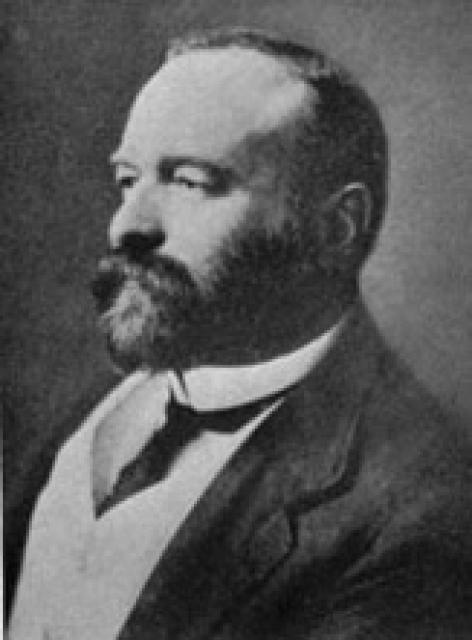
Franklin Giddings
 USA
USA- Introduction to Franklin Henry Giddings
- Characterizing Sociology
- Psychological Foundation and "Consciousness of Kind"
- Society as a Dynamic Organization
- Origins and Dynamics of Association
- Social Forces and Social Process
- Evolution of Thought and Empirical Emphasis
Introduction to Franklin Henry Giddings
American Sociologist and First Full Professor of Sociology in the U.S.
Franklin Henry Giddings (1855-1931) was an American sociologist and the first full professor of sociology in the United States. He aimed to establish a comprehensive sociological system grounded in psychological principles.
Characterizing Sociology
Giddings defined sociology as a "concrete, descriptive, historical, explanatory" science. He distinguished it from psychology, which studies the manifestations of the individual mind, by emphasizing the more complex and specialized mental phenomena observed in the association of individuals.
Psychological Foundation and "Consciousness of Kind"
According to Giddings, sociology studies mental phenomena in their higher complexity and interdependence. He advocated for a "constructive" method of psychological synthesis based on the study of mental probabilities in the "great world of human struggle."
Giddings's central theoretical concept was "consciousness of kind," a sense of identity felt by individuals towards others. He believed this made meaningful interaction possible while preserving individual uniqueness.
Society as a Dynamic Organization
Giddings viewed society as a collection of interconnected, differentiated groups and associations in which social relations and complex organizations were constantly being produced and reproduced. He emphasized the importance of considering society as a union, organization, and sum of external relations linking individuals together.
Origins and Dynamics of Association
Giddings traced the origins of social organization to the emergence of "consciousness of kind." He argued that "true association" begins with the recognition of similarity and a realization that individuals cannot conquer one another.
Social Forces and Social Process
Giddings identified two main types of forces operating in society: "volitional processes" and "forces of natural selection through conscious choice." Volitional processes included individual passions, desires, and climate, while social forces included the influence of groups or society on individuals.
Evolution of Thought and Empirical Emphasis
Initially influenced by psychic evolutionism, Giddings later adopted ideas from philosophers like Ernst Mach and Bertrand Russell. He emphasized statistical methods in researching social reality, contributing to the development of empirical sociology in the U.S. His focus shifted to studying "pluralistic behavior," which he saw as the sum of individual responses to environmental stimuli.


