Fransua Kellerman
 France
- François Christophe Kellermann
- Early Life and Military Career
- Role in the French Revolution
- Accusations and Imprisonment
- Republican Military Leader
- Napoleonic Wars
- Later Years
François Christophe Kellermann
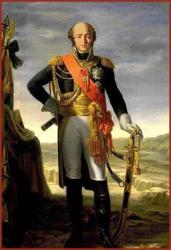
François Christophe Kellermann was a distinguished French military leader who played a pivotal role in the French Revolution and the Napoleonic Wars.
Early Life and Military Career
Kellermann was born in Strasbourg, France, in 1735. The son of a lawyer, he enlisted in 1752 in the French hussar regiment of Löwendal and was promoted to second lieutenant in 1753. He participated in the Seven Years' War (1758-1762) and served as a military instructor in the Polish army from 1765-1766 and 1771-1772.
Role in the French Revolution
With the outbreak of the French Revolution, Kellermann sided with the revolutionaries. He was promoted to major general in 1788 and became a divisional general in 1792. As commander of the Central Army, he joined forces with General Dumouriez and played a decisive role in the famous cannonade of Valmy on September 20, 1792. This victory halted the Prussian invasion and marked a turning point in the war.
Accusations and Imprisonment
Despite his triumph at Valmy, Kellermann faced accusations of insufficient pursuit of the Prussians. He was put on trial but acquitted. In 1793, he was arrested and imprisoned in the Abbaye prison for alleged lack of zeal. He was released after the fall of Robespierre.
Republican Military Leader
After his release, Kellermann was restored to his rank and commanded the Army of the Alps. He liberated Savoy from Spanish occupation but was later forced to cede command to Napoleon Bonaparte. He served as inspector general of cavalry from 1798 to 1799 and senator from 1799 to 1801.
Napoleonic Wars
During the Napoleonic Wars, Kellermann held various high-ranking positions. He was president of the Senate under Napoleon and carried the crown of Charlemagne during his coronation in 1804. He commanded the 3rd Reserve Corps in 1805 and the Reserve Army of Spain in 1808, where he was awarded the title of duke.
Later Years
After the fall of Napoleon, Kellermann rallied to the Bourbons and became a peer of France in 1814. He voted in favor of the death sentence for Marshal Ney in 1815. He died in 1820 and is buried in the Père Lachaise Cemetery in Paris. His heart is interred on the battlefield at Valmy, where a monument was erected in his honor in 1892.