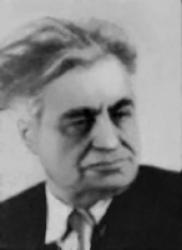
Fransua Makandal
 Haiti
HaitiBiography of François Mackandal
François Mackandal (died January 20, 1758, Le Cap, Santo Domingo) was the leader of the Haitian maroons' uprising. Information about Mackandal is contradictory and largely based on folklore sources. It is known that he was a black slave, brought either from West Africa or from Congo at the age of 12. Tradition calls him an houngan (voodoo priest) and attributes him with magical abilities; according to other sources, he was a Muslim and knew Arabic. While working on a sugar plantation near the town of Le Cap, he lost his hand (it was crushed by a sugarcane crushing machine). After this, Mackandal escaped from the plantation and, along with other runaways, led a large-scale rebellion against slave owners that lasted for 12 years. He proved himself to be a talented speaker and organizer; the number of his supporters varied from 3 to 20 thousand at different times. The rebel maroons used guerrilla tactics, setting plantations on fire at night, attacking French patrols in forests and mountains; Mackandal personally taught slaves how to prepare poison, which they used in battle or secretly added to their owners' food. Mackandal's abilities, as well as his ease of avoiding capture, earned him a reputation as a sorcerer. In 1757, Mackandal was captured and sentenced to be burned at the stake; slaves from the entire island were specially gathered to witness his execution. Although the maroon rebellion led by him was extinguished, his experience was utilized during the Haitian Revolution.
Interesting Facts
One legend about Mackandal claims that he was not burned, but instead turned into a mosquito and flew away during his execution. Cuban writer Alejo Carpentier, one of the creators of "magical realism," uses this myth in his novel "The Kingdom of This World" (Spanish: El Reino de este mundo). The first mention of Mackandal in Russia dates back to 1792: a translated note from German titled "Mackandal the Negro" was published in the journal "Reading for Taste, Reason, and Sensibility."