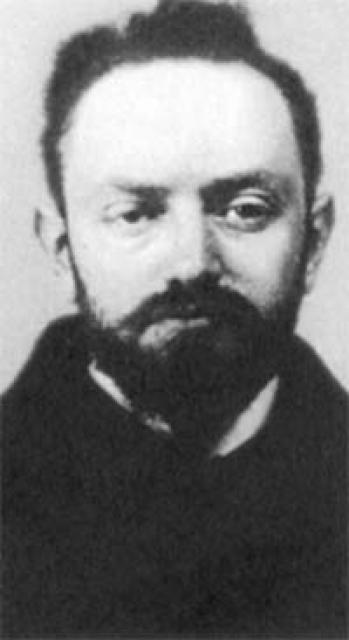
Yakub Ganecky
 Poland
- Biography of Yakub Ganetsky
- Revolutionary Activities
- Exile, Escapes, and Activism
- Collaboration and Controversies
- Repression and Later Career
Biography of Yakub Ganetsky
Yakub Ganetsky was a Polish and Russian revolutionary and Soviet statesman. He was born in 1879 in Warsaw to a family of industrialists with a distant German ancestry. Ganetsky joined the ranks of the Social Democracy of the Kingdom of Poland and Lithuania (SDKPiL) in 1896. He studied at the Universities of Berlin, Heidelberg, and Zurich.
Revolutionary Activities
In 1902, Ganetsky became one of the organizers and members of the Central Committee of the Social Democracy of the Kingdom of Poland and Lithuania. He was a close associate of F. Dzerzhinsky and together they participated in the work of the 2nd Congress of the Russian Social Democratic Labor Party (RSDLP) representing the Polish Marxists. Ganetsky also took part in the 4th, 5th, and other congresses of the RSDLP. He played a leading role in the SDKPiL from 1903 to 1909 and was involved in the 1905 revolution in Warsaw.
Exile, Escapes, and Activism
Throughout his life, Ganetsky faced multiple arrests and exiles. He organized the liberation of well-known social democrats from prisons, including orchestrating their escapes. He was an active member of the Krakow Union for Aid to Political Prisoners. In 1914, Ganetsky played a significant role in the release of Vladimir Lenin from prison in Novy Targ and helped him relocate to Switzerland. He was also a member of the Foreign Bureau of the Central Committee of SDKPiL.
Collaboration and Controversies
In 1915, Ganetsky became an employee of the "Institute for the Study of the Causes and Consequences of the World War" in Stockholm, organized by Alexander Parvus. He worked as the executive director of the export-import company "Fabian Klingsland" in Stockholm, which was funded by German money. Ganetsky's brother was a co-owner of the company, and his cousin, Evgenia Sumenson, represented the company in St. Petersburg. Ganetsky was involved in the organization and financing of Lenin's return to Russia in April 1917.
Repression and Later Career
Ganetsky's connections with Parvus and suspicious financial activities led to accusations of treason against Lenin and other Bolsheviks. He was convicted of smuggling in Copenhagen and faced party investigations in the RSDLP(b). Although initially expelled from the party in early 1918, Lenin personally intervened to reinstate Ganetsky. After the October Revolution, Ganetsky returned to Russia and was appointed Deputy People's Commissar of Finance and Director of the People's Bank of the RSFSR.
In 1920, during the war with Poland, Ganetsky served as a member of the future Soviet government of Poland and participated in peace negotiations. He later became a member of the Central Union and served on the boards of the People's Commissariat for Finance, Foreign Trade, and the People's Commissariat for Foreign Affairs. From 1930 to 1935, Ganetsky was a member of the Presidium of the Supreme Soviet of the RSFSR. He held positions as the head of the State Union of Music, Variety, and Circus from 1932 to 1935, and later became the director of the Museum of the Revolution.
In 1937, Ganetsky was repressed and accused of being a Polish and German spy.


