
Fransua Truffaut
 France
Biography of François Truffaut
Childhood and YouthFrançois Truffaut was born on February 6, 1932, in Paris, France. He was the son of Janine de Monferrand, a secretary for the newspaper "L'Illustration," and was born out of wedlock. His mother raised him as a single parent and hired a nursemaid to help take care of him. In 1933, his mother married Roland Truffaut, an architect, and he gained a stepbrother named René. However, René passed away when François was just a baby, and the two brothers never met. Despite being an only child in his family, François was constantly passed around to different relatives. He spent the longest time living with his grandmother, who instilled in him a love for literature and music. His grandmother passed away when he was 10 years old, and his mother took him back, but their small apartment was too cramped for the two of them. As a result, François often had to sleep in the hallway. As he grew older, François tried to spend less time at home. During this period, he became friends with Robert Lachenay, who later became the inspiration for the protagonist in Truffaut's film "The 400 Blows" and assisted him in the production of other films. François became interested in the works of Abel Gance and André Bazin and developed a passion for cinema. As a teenager, he would skip school and sneak into movie theaters if he couldn't afford a ticket. He dropped out of school at the age of 14 and decided to dedicate his life to the arts.

Personal Life
In his youth, Truffaut was easily infatuated. His first crush was a girl named Lilian. At the age of 14, he entered into a romantic relationship with Geneviève Santen, and while he was at a juvenile correctional center, he became close to a local psychologist. His interest in cinema brought him closer to Liliane Litvin. The next woman in Truffaut's life was Laura Mauri. He also planned to marry actress Claude Jade, and a wedding ceremony was even scheduled, but Truffaut did not show up. He had a series of romantic relationships until he met Madeleine Morgenstern. They met at a film festival in Venice, and Madeleine turned out to be the daughter of a producer, which played an important role in Truffaut's creative development. In 1957, he married Madeleine, and they later had two beautiful daughters. Madeleine's father helped Truffaut start his professional career. Following the advice of an experienced distributor, Truffaut established his own independent company, Les Films du Carrosse. In 1965, his marriage to Madeleine ended. Rumors circulated that their relationship was based solely on financial gain, but Truffaut's affairs had become tiresome for his wife. Almost all the actresses he worked with were involved in romantic relationships with him. Among Truffaut's lovers were Marie-France Pisier, Bernadette Lafont, and Catherine Deneuve. Fanny Ardant was also on this list and gave birth to a daughter.
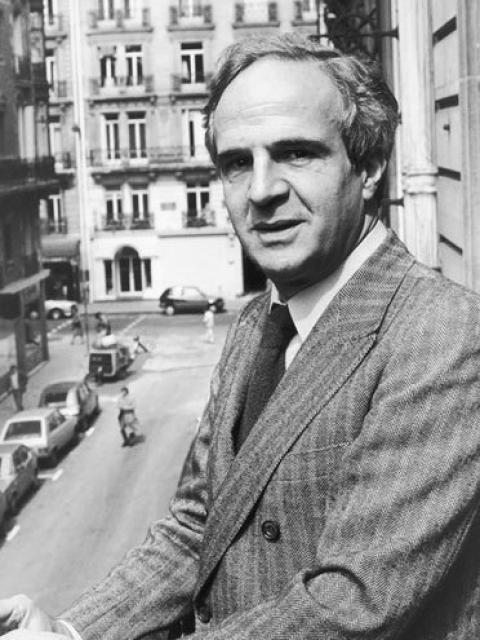
Films
Truffaut began his creative career by writing articles for Cahiers du Cinéma. During this period, he became friends with Jean-Luc Godard, with whom he later collaborated on several films. François acted as a theorist, discussing the role of the author and the craft of filmmaking. He believed that an author's work is created not only for self-realization but also for consumption by the public. One of Truffaut's favorite directors was Alfred Hitchcock, and his love for commercial cinema inspired Truffaut to shoot some of his own films. Creating films under his independent company, Truffaut directed a series of movies featuring the same character, Antoine Doinel. Critics saw Antoine as Truffaut's alter ego. The series began with the film "The 400 Blows," released in 1959, which won the Grand Prix at the Cannes Film Festival. This was followed by "Antoine and Colette," "Stolen Kisses," and "Love on the Run." The thriller "Shoot the Piano Player" with Charles Aznavour as the lead character premiered in 1960, and in 1961, Truffaut released the film "Jules and Jim," which depicted a love triangle. The film starred Jeanne Moreau, and after its release, the term "French New Wave" was coined to describe Truffaut's style, which he described as keeping the audience in suspense and focusing on the performances of the actors rather than words or sounds. Truffaut drew inspiration from silent films.
Truffaut's creative path was filled with ups and downs. For example, the film "Soft Skin," released in 1964, was a failure, but "Fahrenheit 451" allowed Truffaut to redeem himself. In 1973, his film "Day for Night" won the Best Foreign Language Film at the Oscars. In 1975, the premiere of "The Story of Adele H." with Isabelle Adjani in the lead role made the actress popular. The film "The Last Metro" won 10 César Awards and starred Catherine Deneuve and Gérard Depardieu.
Acting Career
Truffaut made his acting debut in the film "The Wild Child." This work marked a promising start for him. He later appeared in his own film "Day for Night" and was also cast in Steven Spielberg's "Close Encounters of the Third Kind." The film was released in 1977.
Truffaut's final acting experience came while working on the project "The Green Room" directed by Julien Duvivier. In his own films, Truffaut often appeared as an extra.
Death
François Truffaut passed away on October 21, 1984, at the age of 52. He died from brain cancer. His former wife, Madeleine Morgenstern, was the only one by his side during his illness. Truffaut found his final resting place in the Montmartre Cemetery. All the women who had been his lovers at some point in their lives were present at his funeral.
Legacy
Truffaut's memory is preserved by his descendants. In 1993, a documentary film titled "François Truffaut: Portrait" was released, directed by Michel Pascal and Serge Toubiana. Serge Toubiana, in collaboration with Antoine de Baecque, wrote a book about the director. Truffaut's photographs are featured in textbooks on film history.
Quotes
"The greatest danger a director faces is losing control of a film while working on it. And this happens much more often than one might think."
"You know why I prefer sophisticated blondes? Because true ladies, modest damsels, are usually no different from prostitutes in the bedroom. Poor Marilyn Monroe had sex written all over her face, and Brigitte Bardot is no more refined in that regard."
"Films should be made the way Shakespeare wrote his plays—for the audience."
Filmography
1954 - "The Visit"
1959 - "The 400 Blows"
1960 - "Shoot the Piano Player"
1964 - "The Soft Skin"
1966 - "Fahrenheit 451"
1968 - "The Bride Wore Black"
1970 - "The Wild Child"
1972 - "Such a Gorgeous Kid Like Me"
1973 - "Day for Night"
1975 - "The Story of Adele H."
1977 - "The Man Who Loved Women"
1978 - "The Green Room"
1980 - "The Last Metro"
1981 - "The Woman Next Door"
1983 - "Confidentially Yours"


