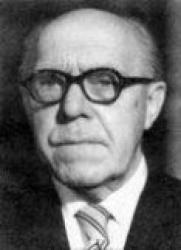
Frantisek Albert
František Albert lived two distinct public lives: for decades he was a country doctor known for caring for ordinary people, while his fiction, essays, and political writing made him a familiar name in Czech literary circles. Trained as a physician in the late Habsburg era, he later became an outspoken advocate of socialist ideas in the new Czechoslovakia.
A doctor from Žamberk
Albert was born on April 29, 1856, in Žamberk, in what is now the Czech Republic. He came from a large family that included his elder brother Eduard, who became a celebrated surgeon, as well as writer Tereza Svatová. František studied medicine at the University of Innsbruck and graduated in 1884.
After working at the university clinic, Albert moved to Vienna and then Prague, where he served as an assistant at the Czech medical clinic. He practiced in Ústí nad Orlicí in 1887 and 1888 before settling in nearby Kostelec nad Orlicí. He remained there as a physician for the rest of his life. Patients remembered him as a doctor devoted to the poor, and his medical career sat alongside a lasting interest in literature, natural science, psychology, and philosophy.
Stories and ideas
Albert wrote fiction and public commentary, gaining particular popularity for stories inspired by old Prague. His works included Skřítkové (The Little Spirits), a story set in the historic city, as well as essays and books on humanism and social life. He also translated and published in the press, giving his writing a reach beyond the small towns where he practiced medicine.
In his early years he was associated with Czech realism, as was his brother Eduard. The First World War changed his political outlook. He came to see the Russian Revolution as a model for a new social order, embraced historical materialism and Marxism, and wrote political articles for left-wing newspapers. In January 1921 he joined the left wing of the Czechoslovak Social Democratic Party and became a founding member of the Communist Party of Czechoslovakia. He also lectured for Proletkult, a workers’ cultural movement.
A lasting double legacy
Albert died in Potštejn on July 22, 1923, aged 67. His writing continued to appear after his death, including collected works published in 1924. Readers have remembered him both as a popular storyteller drawn to Prague’s past and as a physician who treated his work as a form of public service. His life bridged the clinic, the literary world, and the turbulent politics of a newly independent country.