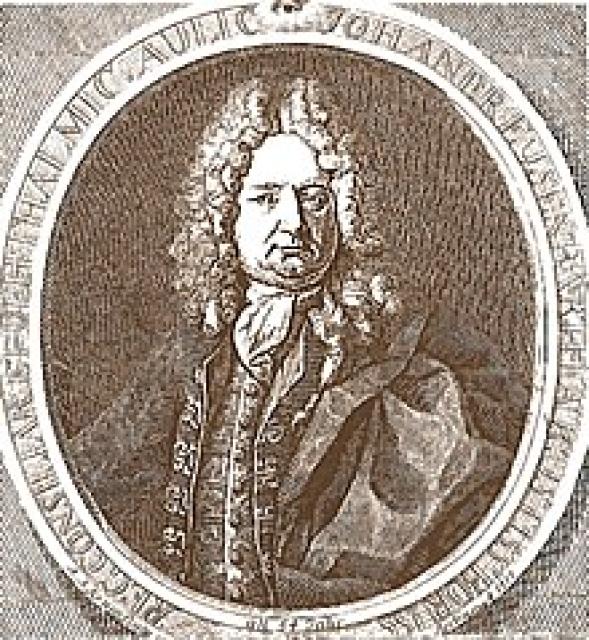
Johann Andreas Eisenbarth
 Germany
- A Renowned Physician and Legendary Figure
- Itinerant Healing and Growing Fame
- Ascendancy and Popular Acclaim
- Controversy and Legacy
- Posthumous Honors and Cultural Impact
A Renowned Physician and Legendary Figure
Dr. Johann Andreas Eisenbart, a German physician born into a Catholic family in Upper Palatinate (now Bavaria), inherited his father's medical profession. After studying medicine in Bamberg, he embarked on a journey as an itinerant physician in 1685.
Itinerant Healing and Growing Fame
Traveling across various countries, Eisenbart employed innovative treatments and medicines that garnered him widespread recognition. Settling in Erfurt in 1689, he proclaimed himself "City Physician of Erfurt." In 1703, he purchased Magdeburg citizenship for 12 thalers and relocated there, continuing his healing practices.
Ascendancy and Popular Acclaim
With the Prussian king Frederick William I's permission in 1716, Eisenbart's fame soared. Accompanied by an entourage including even comedians, he roamed from town to town, practicing on market squares. He became a humorous character in German folklore due to his boisterous and flamboyant demeanor.
Controversy and Legacy
While some dismissed Eisenbart as a boastful charlatan, his undeniable medical skills were recognized in the treatment of cataracts, hernias, and bladder stones. However, his practice of treating other ailments was forbidden by contemporary legislation. Nonetheless, he invented surgical instruments and sterilized them over fire before operations.
Posthumous Honors and Cultural Impact
In honor of Dr. Eisenbart, streets and avenues bear his name in Oberviechtach, Bamberg, Viechtach, Magdeburg, and Hannover-Münden. Annual humorous "Dr. Eisenbart" festivals have been held since 1935 in Viechtach and Oberviechtach, his birthplace, and since 1950 in Hannover-Münden. Austrian composer Nico Dostal and librettist Hermann Hermecke created the operetta "Dr. Eisenbart," which premiered in Nuremberg in 1952.


