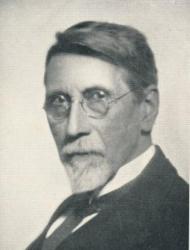
Franz Adolf Berwald
 Sweden
- Biography of Franz Adolf Berwald
- Early Life and Education
- Musical Journal and Initial Works
- Temporary Break from Music
- Later Works and Legacy
Biography of Franz Adolf Berwald
IntroductionFranz Adolf Berwald was a Swedish composer, violinist, and conductor who lived during the Romantic period. Despite being practically unrecognized during his time, he made a living as an orthopedic surgeon, manager of a sawmill, and glass factory. Berwald came from a family of musicians, with four generations of his ancestors also working in the field.
Early Life and Education
Berwald's father, Franz, played the violin in the Royal Opera Orchestra and taught his young son the art of violin playing. In 1811, the Royal Chapel was revived under King Karl XII, and Franz secured a position there. He also performed in the court orchestra and local opera and tried his hand at composing. Berwald received violin lessons from Eduard du Puy and embarked on summer travels through Scandinavia, Finland, and Russia during the off-season.
Musical Journal and Initial Works
In 1818, Berwald started his own music journal called "Musikalisk," later renamed "Journal de musique." The journal published simple piano compositions by various composers, including Franz himself. In 1821, Berwald's brother, August, introduced Franz's "Violin Concerto" to the public, but it did not receive much acclaim, with some listeners openly laughing at its leisurely melody. After their father's death in 1825, the family faced serious financial problems. Berwald tried to secure multiple scholarships but was only successful with the Royal one. This scholarship allowed him to study in Berlin, where he continued working on several operas, although he knew they might never be performed. To make ends meet, Berwald also opened an orthopedic and physiotherapeutic clinic, which turned out to be quite lucrative.
Temporary Break from Music
For a period of time, Berwald ceased his musical pursuits and only returned to his beloved art in 1841. In that year, he moved to Vienna and married Mathilde Scherer. In 1842, Berwald gave a concert at the Hofburg Imperial Palace, which was received quite well. Over the next three years, he composed four symphonies, with only one of them, the "Sérieuse," gaining recognition during his lifetime. In 1843, Berwald's cousin, Johan Frederik, conducted its performance with the Royal Opera House Orchestra. During this time, Berwald's operetta "Jag går i kloster" was also staged, though its success is largely attributed to the talent of singer Jenny Lind.
Later Works and Legacy
In 1855, Berwald completed his piano concerto, originally intended for his student Hilda Aurora Thegerström. Unfortunately, it was not released until 1904, when it was performed by Berwald's daughter, Astrid, at a student concert in Stockholm. The concerto, especially its brilliant final movement, is often compared to the best works of Robert Schumann and Edvard Grieg. Berwald passed away in Stockholm in 1868 from pneumonia and was buried at the Norra begravningsplatsen. His funeral featured the performance of the second movement of his first symphony.