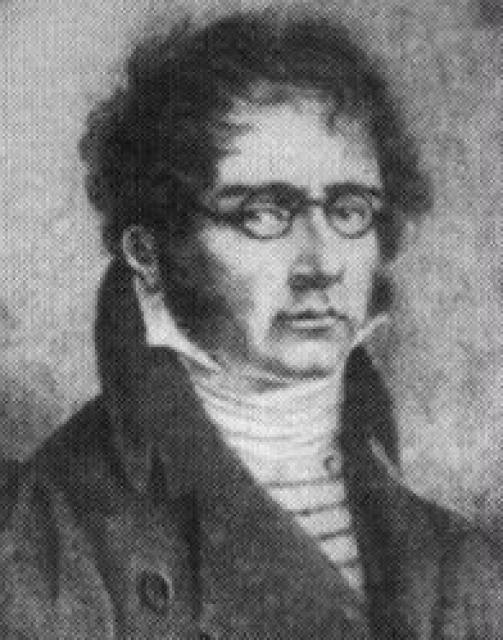
Franz Danzi
 Germany
- Franz Danzi: A Life in Music
- Early Career
- Leading the Karlsruhe Kapelle
- A Bridge Between Classical and Romantic
- Personal Connections
- Musical Legacy
- Recognition and Legacy
Franz Danzi: A Life in Music
Franz Danzi (1763-1826) was a German composer, cellist, and conductor who played a significant role in the transition from Classicism to Romanticism in European music.
Early Career
Danzi's career began as vice-Kapellmeister in Munich (1798). He then became Kapellmeister in Stuttgart (1807-1812), where he forged a friendship with Carl Maria von Weber.
Leading the Karlsruhe Kapelle
In 1812, Danzi was appointed director of the Kapelle in Karlsruhe, where he remained until 1826. This period saw his growing influence as a musical leader.
A Bridge Between Classical and Romantic
Danzi's life and career coincided with the transition from Classical to Romantic music. His work as a composer and conductor reflected the shift towards a more expressive and emotional style.
Personal Connections
Danzi was acquainted with Wolfgang Amadeus Mozart, a contemporary of Ludwig van Beethoven, and a mentor to Weber. He also collaborated with his wife, the singer Sophie Danzi, and her opera troupe, touring throughout Europe.
Musical Legacy
As a composer, Danzi created operas, sacred music, choral works, and chamber music. However, he is best known for his compositions for wind instruments, including quintets, bassoon concertos, and flute concertos, which continue to be performed and recorded by leading European ensembles.
Recognition and Legacy
Danzi's contributions to music have been widely recognized. His correspondence has been published and annotated. The concert hall in Schwetzingen has been named after him since 2005, honoring his musical legacy.




