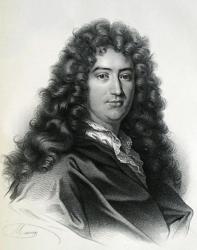
Franz Dingelstedt
 Germany
- Franz Dingelstedt: A Literary and Theatrical Luminary
- Literary and Theatrical Successes
- Theater Management and Playwriting
- Shakespearean Adaptations and Viennese Triumphs
- Literary Transition and Legacy
Franz Dingelstedt: A Literary and Theatrical Luminary
Early Life and Political PoetryFranz Dingelstedt, born in 1814, was a multi-talented German writer, dramatist, and theatrical director. He began his career as a teacher in Kassel before launching into the literary world in 1840 with his anonymous collection of poems, "Songs of an International Night Watchman." This work, imbued with Heine-esque irony, critiqued the social and political landscape of Germany. It catapulted Dingelstedt to fame, establishing him as a leading political poet.
Literary and Theatrical Successes
In 1841, Dingelstedt resigned from teaching and settled in Augsburg, where he wrote literary and aesthetic articles for the "Allgemeine Zeitung." Travel assignments took him to Paris, London, Holland, and Belgium, before he accepted a prestigious offer from the King of Württemberg in 1843 to become court councilor and royal librarian in Stuttgart.
Theater Management and Playwriting
From 1846, Dingelstedt began writing prologues and plays for the court theater in Stuttgart, including the notable "House of Barneveldt" in 1850. In 1851, he became director of the Munich Court Theater and penned several plays for its stage. He staged masterpieces by Goethe, Schiller, Lessing, and others, raising the artistic standards of German theater.
Shakespearean Adaptations and Viennese Triumphs
In 1857, Dingelstedt moved to Weimar, where he continued his theatrical leadership, directing Shakespearean works and other classics. In 1867, he relocated to Vienna, becoming director of the Opera. From 1870 until his death, he managed the renowned Burgtheater, showcasing plays by Goethe, Kleist, and Grillparzer.
Literary Transition and Legacy
As a lyricist and novelist, Dingelstedt bridged the gap between the political poetry and pessimism of the early 1800s and the "artistic realism" of the later era. Besides his famous poem collection, he published several novels and stories, including "Underground" in 1840 and "The Amazon" in 1868.
Dingelstedt's greatest legacy lies in his contributions to German drama and theater. His own play, "House of Barneveldt," reflected his deep understanding of German classics. He skillfully adapted many Shakespearean plays for the German stage, bringing them to a wider audience. His efforts to promote and elevate German theater earned him the honor of founding the Shakespeare Society in Germany.
Franz Dingelstedt's "Collected Works" were published in Berlin in 1877, while his autobiography can be found in "Munich Picture Book." His immense talent and influence left an indelible mark on the literary and theatrical landscape of his time.