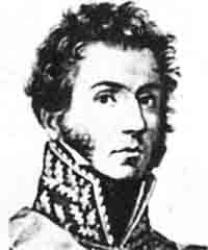
Fred Akuffo
 Ghana
Ghana- Early Life and Military Career
- Rise in Military Hierarchy
- Chief of Defence Staff and Coup
- Policies as Head of State
- Economic Challenges and Unpopularity
- Overthrow and Imprisonment
Early Life and Military Career
Frederic William Kwasi Akuffo was born on March 21, 1937, in Akropong, Eastern Province, in the then-British colony of Gold Coast. In 1952, he enrolled at the Presbyterian Secondary School in Odumasi-Krobo, Eastern Province. After graduating in 1955, he joined the newly formed national army as a cadet in 1957, following Ghana's independence.
In 1958, Akuffo was sent to the Royal Military Academy Sandhurst in the United Kingdom for training. Upon completing his course, he returned to Ghana in 1960, but returned to the UK the following year for a short airborne course, becoming the first Ghanaian officer to specialize in this field. In 1965, he became the commandant of the Airborne Training School in Tamale, Northern Province.
Rise in Military Hierarchy
After the overthrow of Ghana's first president, Kwame Nkrumah, in 1966, Akuffo was promoted and sent to the Staff College in the UK in 1967. In 1969, he was appointed commanding officer of the 6th Infantry Battalion.
In 1970, Akuffo was promoted to Director of Operations Planning at the Ministry of Defence. He was then appointed Deputy Commander of a Brigade in 1972 and attended the National Defence College in Delhi, India, in 1973.
In April 1974, Akuffo was appointed Army Commander with the rank of Major-General. He oversaw the successful "Keep Right" operation, transitioning Ghana's road traffic from left-hand to right-hand drive on August 4, 1974.
Chief of Defence Staff and Coup
In October 1975, Colonel Ignatius Acheampong, the Head of State of Ghana, appointed Akuffo, now a Lieutenant-General, as Chief of Defence Staff and inducted him into the ruling Supreme Military Council. In November 1976, he became Chief of Defence Staff and Acheampong's deputy.
In 1978, amidst mounting political pressure and worsening economic crisis, the Supreme Military Council decided that Acheampong was no longer capable of leading Ghana. Akuffo and Army Commander Neville Odartey-Wellington played key roles in the conspiracy.
On July 5, 1978, Acheampong was summoned to a meeting at the Burma Camp, where he was asked to sign a resignation letter that had been prepared the day before. When he refused and attempted to summon loyal officers, Major-General Odartey-Wellington threatened him with a revolver, forcing him to sign the document. Acheampong was detained and sent to his mother's home in Trabuom, Ashanti Region. Akuffo, as Chief of Defence Staff, assumed the position of Head of State.
Policies as Head of State
Akuffo publicly pledged to return the country to democratic rule, convene a Constituent Assembly in November, and hand over power to an elected civilian president by July 1, 1979. He released a White Paper accusing Acheampong of corruption and conduct unbecoming of an officer, but he was not prosecuted and was only stripped of his rank and dismissed from the military. This raised doubts about the new regime's commitment to justice.
Akuffo implemented several reforms, including appointments in the civil service and military, the banning of certain advocacy groups, and the creation of a Public Accounts Committee to tackle corruption.
On July 12, Akuffo addressed the nation on radio, outlining a program of economic recovery, including austerity measures, increased taxes, and a floating exchange rate for the cedi.
Economic Challenges and Unpopularity
Despite Akuffo's efforts, the economy continued to struggle, with high inflation, shortages of essential goods, and a substantial external debt. Multiple devaluations of the cedi further eroded public support, and the Supreme Military Council lost popularity.
Overthrow and Imprisonment
In June 1979, Akuffo was overthrown in a military coup led by Flight Lieutenant Jerry Rawlings. Akuffo was arrested and imprisoned, along with other members of the Supreme Military Council.
On June 26, 1981, Akuffo and three former heads of state, Acheampong, Afreh, and Akuffo, were executed by firing squad at Teshie Military Range. The executions sparked controversy and remain a contentious issue in Ghanaian history.