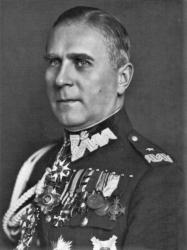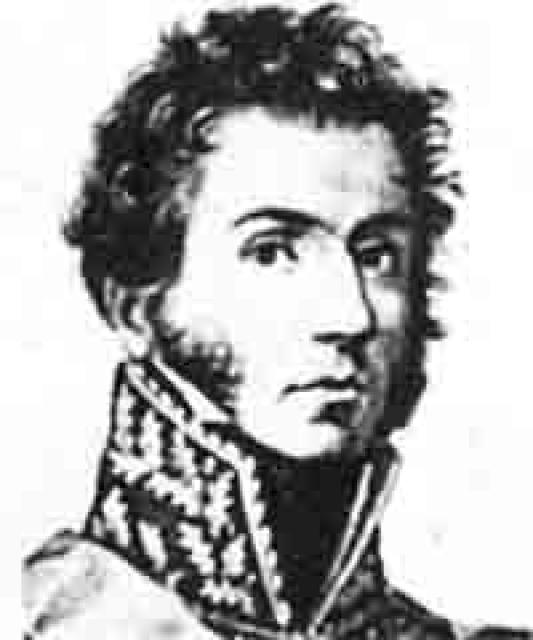
Josef Molitor
 France
Biography of Joseph Molitor
Count (June 29, 1808), Divisional General (October 26, 1800). In 1791, he volunteered for the 4th Battalion of Moselle and was elected captain on August 25. He participated in the campaigns of Moselle (1793-94), Ardennes, Rhine-Moselle (1795-97), and Danube army. He distinguished himself with selfless bravery. From September 10, 1793, he served as a battalion adjutant, and from June 13, 1795, as a brigade. From January 1797, he fought in the division of General Ambert, and from April, under L. Saint-Cyr. In the 1799 campaign in Switzerland under the command of General A. Massena, he distinguished himself in the battles at Schwyz, Glarus, and Mollis. From June 19, 1799, he served as an acting brigade commander. From July 1799, he was part of the division of General Udino. On July 30, 1799, he was promoted to brigadier general. From August 14, 1799, he commanded the 3rd brigade of General Lecourbe's division. He participated in battles against Russian troops and the pursuit of A.V. Suvorov's army. From October 3, 1799, he commanded the brigade of the 4th division. From March 30, 1800, he commanded the 2nd brigade of General D. Vandamme's division in the Rhine army. In 1800, he was the first to cross the Rhine and defeat the left wing of the Austrian army at Stockach and Messkirch. On July 4, Molitor became the commander of the 1st division of General Lecourbe's corps. He distinguished himself in the battle of Feldkirch. From 1800, he was part of Lecourbe's troops in Germany. On June 18, 1801, he left the active army and on August 22, he was appointed commander of the 7th military district in Grenoble. From August 26, 1805, he commanded the 4th division of the Italian army. On September 16, 1805, he replaced General Zayonchek as the commander of the 3rd division of the Italian army. He distinguished himself in the battle of St. Michel. At Caldiero, he commanded the left flank and decided the outcome of the battle with a decisive attack. From December 11, 1805, he was the commander of the infantry division in the 8th corps of the Grand Army. In January 1806, he participated in the occupation of Dalmatia and then relieved General Lauriston's troops in Ragusa. From November 4, 1806, he was the commander of the division in Brescia. From April 29, 1807, he commanded the 2nd division of the observation corps and was the governor of Pomerania. On July 7, 1807, he captured Stralsund in Northern Germany. On December 1, he temporarily took command of the 4th corps of the Grand Army. From August 1808, he commanded a division in Sultan's troops in Germany. From October 1808, he fought on the Rhine. From February 23, 1809, he commanded the 3rd division of the Rhine observation corps (later the 4th corps of Marshal A. Massena). He distinguished himself at Neumarkt. On the night of May 19, 1809, with his division, he captured the strategically important Lobau Island. On May 21, he was pushed back to Aspern and with great difficulty repelled the Austrian attack. In the evening, he took on the main force of the Austrian army and put up a fierce resistance (Aspern changed hands six times). He became famous for defending positions at the Battle of Wagram. In February 1810, Molitor was responsible for the defense of the Hanseatic cities and from July 1, 1811, for the defense of the Netherlands, where he held the post of commander of the observation corps division. From September 19, 1810, he was the commander of the 17th military district in Amsterdam. After the defeat of the French forces and the start of the offensive of the allies, he participated in the battles of Châlons, the Marne, and La Ferté-sous-Jouarre. On November 18, 1813, he evacuated the Netherlands and on December 17, he joined Marshal MacDonald. During the first Restoration, he sided with the Bourbons and in May 1814, he was appointed Inspector General of Infantry of the 4th military district in Metz. From September 30, 1814, he was the Inspector General of Infantry of the 3rd and 4th districts. During the "Hundred Days" on April 14, 1815, he began forming a division of the National Guard of the 5th district. In June-July 1815, he commanded the division of the National Guard of the 5th corps of General Rapp. Twenty days before his second abdication on June 2, 1815, Napoleon made Molitor a peer of France. After the second Restoration on August 1, he was dismissed. In 1818, Molitor once again gained the favor of the Bourbons and on January 21, he was appointed Inspector General of Infantry. He then held a number of high positions in the royal army. During the Spanish campaign of 1823, from July 12, he commanded the 2nd corps and forced the surrender of General Ballesteros' army. For this victory in Spain, on October 9, 1823, he was promoted to Marshal of France and received the title of peer of France. From October 6, 1847, he held the position of governor of the Invalides. After the election of Napoleon III as president, he was appointed Grand Chancellor of the Order of the Legion of Honor on December 23, 1848. He was also a military writer.