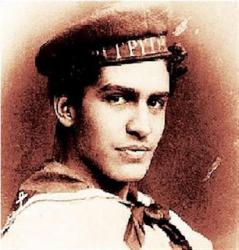
Frederick Gore
 Great Britain
- Frederick Gore: A Life in Paint
- Passion for Painting
- European Influences
- Wartime Service and Teaching
- Southern Landscapes and Recognition
- Later Years and Legacy
Frederick Gore: A Life in Paint
Frederick Gore was born on August 17, 1913, into a family of artists. His father, Spencer Gore, was a renowned painter and the former president of the Camden Town Group, while his mother was a dancer. Gore's early aspirations were in philosophy, and he enrolled at Oxford University to pursue this interest.
Passion for Painting
However, Gore's passion for art ultimately prevailed. He abandoned his philosophy studies and enrolled at the Slade School of Fine Art in London, where he studied under Henry Tonks. He then joined Mark Gertler's class at the Westminster School of Art.
European Influences
After completing his art education, Gore traveled extensively throughout Europe, seeking inspiration and broadening his artistic horizons. In Greece, where he resided for a year, he painted extensively and absorbed the influence of classical art. His travels also took him to France, where he exhibited his work at the Galerie Borghèse in 1938, earning the label of "English Fauvist."
Wartime Service and Teaching
During World War II, Gore served as an officer specializing in military camouflage and deception, contributing to the Allied forces' D-Day landings preparations. After the war, he began his teaching career at St. Martin's School of Art in 1946. From 1951 to 1979, he became Head of Painting there, and from 1961 to 1979, he served as Vice Principal.
Southern Landscapes and Recognition
Throughout his career, Gore spent his summers painting in the south. In the 1950s and later, he frequented the Greek islands of Paros and Aegina, while in the 1960s, he visited Mallorca and Provence. These travels inspired his remarkable landscapes, capturing the vibrant colors and serene atmosphere of the Mediterranean. Gore's artistic achievements culminated in his election to the Royal Academy of Arts in 1972.
Later Years and Legacy
Gore continued to create and exhibit his work throughout his later years. In 1980, he traveled to the United States, visiting New York City and the Yale Center for British Art in New Haven. He was awarded the Order of the British Empire in 1987 for his contributions to the arts. In 1991, he created a series of posters for the London Transport Museum, showcasing his versatility as an artist. Frederick Gore passed away on May 20, 2009, leaving behind a legacy of vibrant and expressive paintings that continue to inspire and delight art enthusiasts worldwide.