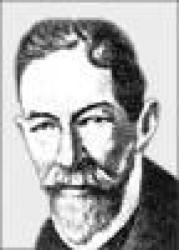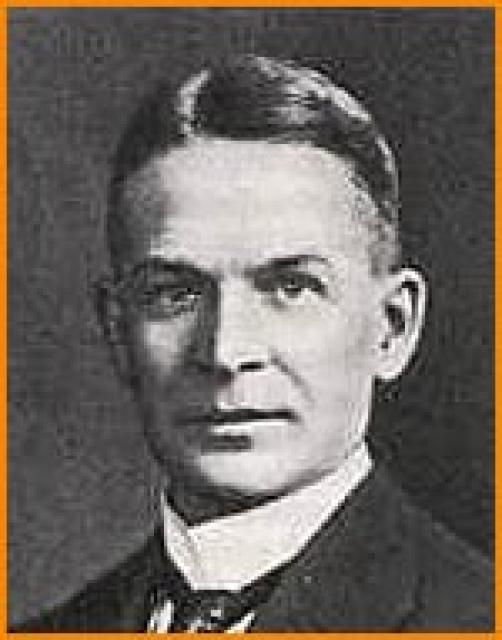
Frederick Soddy
 Great Britain
Biography of Frederick Soddy
Frederick Soddy, an English radiochemist, was born on September 2, 1877, in Eastbourne, Sussex, United Kingdom. He was the seventh son of London merchant Benjamin Soddy and Hannah Green. Sadly, Frederick's mother passed away when he was only two years old, and he was raised by his step-sister. From a young age, Frederick showed a keen interest in science, and his mentor at Eastbourne College advised him to pursue chemistry at Oxford University.
In preparation for his admission, Soddy spent a year studying at the University College of Wales in Aberystwyth. In 1895, he was accepted into Merton College, Oxford University, where he received a scientific scholarship. He studied chemistry under Sir William Ramsay (Nobel Prize in Chemistry 1904) and graduated with honors in 1898. Over the next two years, Soddy conducted independent chemical research at Oxford.
Research on Radioactivity
In 1900, Soddy took a position as an assistant professor of chemistry at McGill University in Montreal, Canada. It was here that he collaborated with future Nobel laureate Ernest Rutherford on solving problems related to radioactivity. In 1901-1902, Rutherford and Soddy developed the theory of radioactive decay. According to this theory, several of the heaviest elements gain stability by emitting small, yet sufficiently distinct, units of mass, charge, and energy from their nuclei as alpha, beta, and gamma particles. This process results in the formation of other elements.
While studying the radioactive decay of radium, Soddy experimentally proved that helium is formed as a result of radium decay. This was the first documented case of the formation of one element from another. Furthermore, through a series of experiments, Soddy demonstrated that radium is formed through the gradual decay of uranium atoms. Thus, Soddy proposed the hypothesis that an intermediate element must be formed during this transformation.
Returning to England in 1903, Soddy continued his work with William Ramsay, while also conducting research at the University College in London. In 1904, Soddy began lecturing on physical chemistry and radioactivity at the University of Glasgow. In 1913, he formulated the concept of isotopes - atoms of the same element that differ in physical properties. All isotopes of the same element occupy the same position in the periodic table but have different atomic masses. According to Soddy, isotopes are identical "on the outside" but different "on the inside."
Independent of the American physicist-chemist Kazimierz Fajans, Soddy formulated the law of radioactive displacement. This law states that alpha particle emission results in the transformation of one element into an isotope of another element located two positions lower in the periodic table, while beta particle emission causes displacement one position higher. The law of displacement allowed the prediction of the decay sequence of many radioactive elements by determining the elements produced based on the type of radiation emitted and incorporating them into the periodic table. In 1914, when World War I broke out, Soddy left the University of Glasgow and took a position as a professor of chemistry at the University of Aberdeen. During the war, Soddy confirmed the implications of the law of displacement. By tracing the origin of actinium, he demonstrated that ordinary lead is actually a mixture of isotopes.
Later Life and Contributions
Upon becoming a professor of inorganic and physical chemistry at Oxford University in 1919, Soddy devoted a significant portion of his time to improving the quality of teaching and modernizing the university laboratory equipment. In 1920, Soddy predicted that isotopes could be used to determine the geological age of rocks and fossils, as the rate of their radioactive decay is known. This hypothesis ultimately led to the development of modern radioactive dating technology, such as the carbon-14 dating method developed by American chemist Willard Libby (Nobel Prize 1960) in the 1940s.
In 1921, Soddy was awarded the Nobel Prize in Chemistry for his contributions to the chemistry of radioactive substances and his investigations into the origin and nature of isotopes. In his Nobel lecture, delivered in 1922, Soddy regarded this work as just a "small part of the considerable pioneering work in many fields" that had been carried out over the past 20 years. He also expressed gratitude to Rutherford for introducing him to the problems of radioactivity early in his scientific career in Montreal.
After receiving the Nobel Prize, Soddy gradually moved away from active scientific research in chemistry and turned his attention to economic, social, and political theories, writing several books on these topics. He also became interested in theoretical problems in mathematics. However, Soddy gained the most recognition for his contributions to atomic structure theory. Despite foreseeing the potential value of atomic energy for peaceful purposes, in his later years, the scientist expressed deep concern about the emergence of atomic weapons and the nuclear arms race. He called on his colleagues to take responsibility for the social consequences of their scientific research.
Soddy believed that scientific recognition came to him with noticeable delay, leading to the development of bitterness in his character and public criticisms of prominent scientists. Overall, Soddy had difficulty getting along with people, although he was a good lecturer.
After the death of his wife in 1936, Soddy retired from his position as a professor at Oxford University at the age of 59 and moved to Brighton, where he passed away on September 22, 1956.