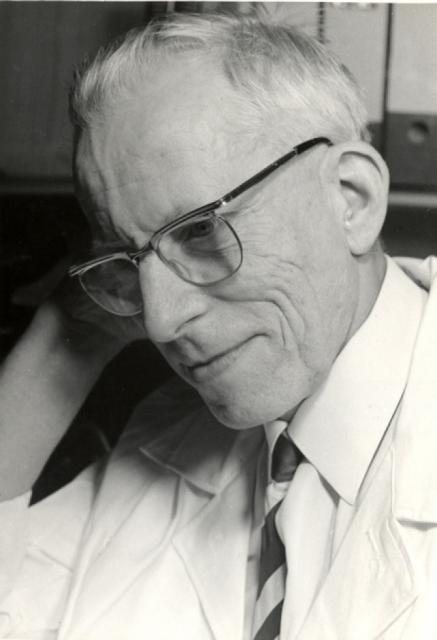
Otto Wichterle
 Czech
Czech- Biography of Otto Wichterle
- Early Life and Education
- Inventor of Soft Contact Lenses
- Later Life and Legacy
- Otto Wichterle passed away on August 18, 1998, at the age of 84.
Biography of Otto Wichterle
Otto Wichterle was a Czech chemist who became famous for inventing modern soft contact lenses. With the invention of contact lenses, numerous manufacturers started producing this product, but only a few companies gained recognition. Experts from the globally renowned company Johnson & Johnson developed unique Acuvue lenses, which not only correct vision but also take care of your eyes. Moisturizing components, optimal thickness, and UV filters for protection against ultraviolet rays - all these features describe Acuvue lenses, which can be purchased at the online store "Ochkarik".
Early Life and Education
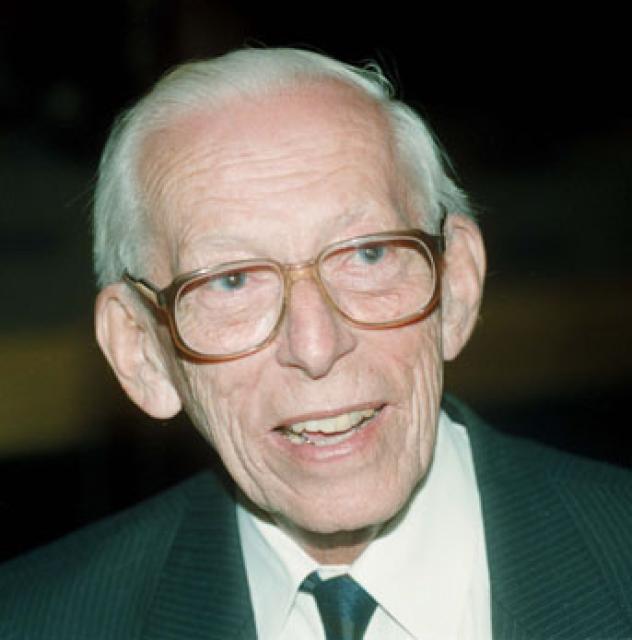
Wichterle was born on October 27, 1913, in the city of Prostejov in eastern Czech Republic. His father, Karel Wichterle, was a co-owner of a successful factory producing agricultural equipment and a small car plant. However, Otto did not follow in his father's footsteps and chose science. He studied at the Faculty of Chemistry and Technology at the Czech Technical University and had a keen interest in medicine. In 1936, Otto graduated from the university and remained at the faculty. In 1939, he defended his second doctoral dissertation in chemistry, but in March 1939, Czechoslovakia was occupied by the Nazis, and by November, all universities in the country were closed. Nevertheless, Wichterle managed to find a position at the research institute of the footwear company 'Bata' in Zlin, where he continued his research and supervised the technical preparation of plastics, polyamides, and caprolactam.
Inventor of Soft Contact Lenses
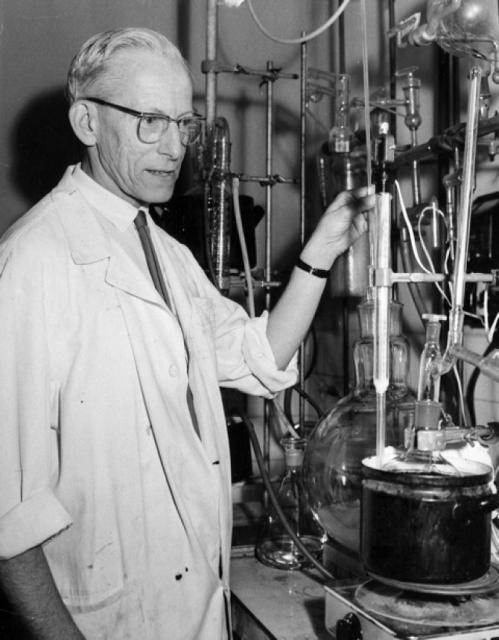
In 1941, Wichterle's team invented a method of winding polyamide yarn onto a spool, resulting in the creation of a Czechoslovak synthetic fiber called "silon". A year later, Wichterle was imprisoned by the Gestapo for several months but was eventually released. After World War II, Wichterle returned to the university, focused on organic chemistry, and taught general and inorganic chemistry. He wrote a textbook on inorganic chemistry, which was ahead of its time, and developed German and Czech textbooks on organic chemistry. In 1949, Wichterle revised and expanded his second doctoral dissertation on plastics technology and dedicated himself entirely to creating a new plastics technology department. In 1952, he became the dean of the newly established Institute of Chemical Technology in Prague.
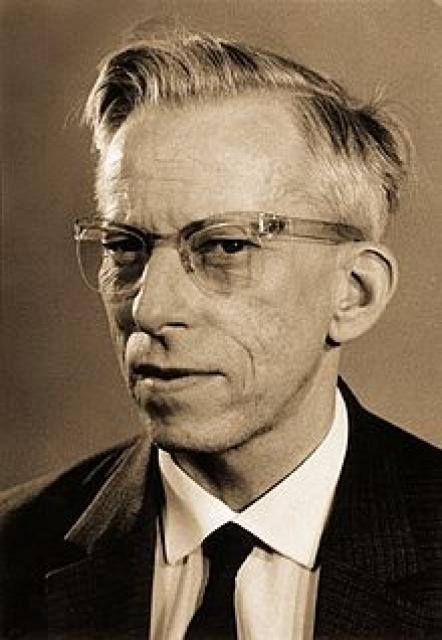
From this point on, Wichterle devoted himself to the synthesis of cross-linked hydrogels, aiming to find a material suitable for permanent contact with living tissues. With the help of his colleague Drahoslav Lim, Wichterle developed a hydrogel capable of absorbing up to 40% water, possessing suitable mechanical properties, and being transparent. The scientists patented their invention in 1953, and soon Wichterle obtained his first patent for soft contact lenses. However, it took several years of further development and refinement of the prototypes before the lenses could be mass-produced. In the meantime, Wichterle, along with other outstanding scientists, had to leave the Institute of Chemical Technology due to political purges. However, the International Symposium on the Chemistry of High-Molecular Compounds held in Prague in 1957 convinced the country's leadership of the need to establish a center for synthetic polymer research. As a result, Otto Wichterle became the director of the Institute of Macromolecular Chemistry of the Czechoslovak Academy of Sciences in 1958.
By the end of 1961, Wichterle managed to produce the first four contact lenses made of hydrogel. He tried them on his own eyes and found them to be very comfortable. The machine on which Wichterle made the lenses was assembled using parts from a children's construction set belonging to one of his sons. Today, the machine is kept in a museum. A few days later, Wichterle patented the new lenses, and by the first four months of 1962, 5,500 lenses were manufactured. Unfortunately, without his knowledge, CSAS sold the patent rights to Americans, and mass production of contact lenses mainly took place abroad, particularly in the United States.
Later Life and Legacy
However, Otto Wichterle is known both domestically and internationally not only for his invention but also for his involvement in international organizations, such as the International Union of Pure and Applied Chemistry. He played a significant role in organizing chemistry symposiums in Prague and administrative work at the institute. Wichterle published over 200 papers in chemistry and obtained around 180 patents, including numerous valuable ones in the field of medicine.
In 1970, Wichterle lost his position at the institute again, and the authorities prohibited him from holding managerial positions and limited his contacts with foreign scientists for nearly 20 years. Finally, in 1990, after the Velvet Revolution, he was elected president of the Czechoslovak Academy of Sciences and later became the Honorary President of the Academy of Sciences of the Czech Republic. In 1993, an asteroid was named in his honor as asteroid number 3899.


