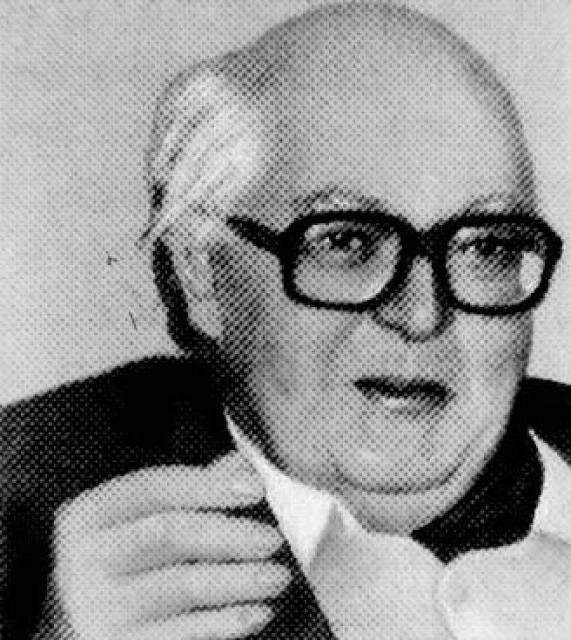
Fridrih Durrenmantt
 Switzerland
- Early Life and Education
- Transition to Writing and Artistic Career
- The Playwriting Masterpiece
- The Power of Greed and Individualism
- Moral Responsibility in the Nuclear Age
- Other Notable Plays
- Literary Success in Prose
- Later Years and Legacy
Early Life and Education
Friedrich Dürrenmatt was born on January 5, 1921, in Konolfingen, Switzerland.
He initially studied literature, philosophy, and natural science at the Universities of Bern and Zurich.
Transition to Writing and Artistic Career
In the 1940s, Dürrenmatt abandoned his artistic aspirations and turned to writing.
The Playwriting Masterpiece
In 1956, Dürrenmatt's most famous work, the tragicomedy "The Visit of the Old Lady" (Der Besuch der alten Dame), was published.
The Power of Greed and Individualism
In "The Visit of the Old Lady," the whimsical and capricious millionairess Clara Zachanassian offers a poverty-stricken town a substantial sum of money for the murder of Alfred Ill, who seduced and abandoned her four decades earlier.
Moral Responsibility in the Nuclear Age
Dürrenmatt's 1962 play "The Physicists" (Die Physiker) explores the ethical and civic duties of scientists in the nuclear era.
Other Notable Plays
Among Dürrenmatt's other plays are "Romulus the Great" (Romulus der Grosse, 1949) and "An Angel Comes to Babylon" (Ein Engel kommt nach Babylon, 1953).
Literary Success in Prose
Dürrenmatt's detective fiction also garnered widespread acclaim. Notable works include "The Judge and His Hangman" (Der Richter und sein Henker, 1952), "The Suspicion" (Der Verdacht, 1953), and "The Promise" (Das Versprechen, 1958).
Later Years and Legacy
Dürrenmatt lived in Neuchâtel from 1952 until his passing on December 14, 1990.
He continued to write prolifically until his death, including the novels "The Greek in Search of Greekness" (Grieche sucht Griechin, 1955) and "The Assignment" (Der Auftrag, 1988).


