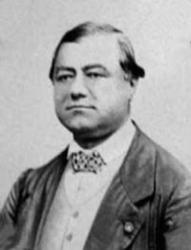
Friedrich Bessel
 Germany
- Friedrich Wilhelm Bessel: Pioneer of Astrometry
- Early Life and Education
- Astronomical Observations and Discovery
- Founding Father of Astrometry
- Measuring Stellar Parallaxes
- Unveiling Invisible Stellar Companions
- Legacy and Influence
Friedrich Wilhelm Bessel: Pioneer of Astrometry
Friedrich Wilhelm Bessel (1784-1846) was a renowned German astronomer and mathematician who made significant contributions to the field of astrometry. He played a pivotal role in establishing the discipline and developing groundbreaking methods for correcting observational errors.
Early Life and Education
Born in the small town of Minden, Germany, Bessel initially pursued a career as a merchant. However, his passion for mathematics and astronomy led him to embark on a path of self-education. By the age of 20, he had independently calculated the orbit of Halley's Comet.
Astronomical Observations and Discovery
Under the mentorship of the renowned astronomer J. Schroeter, Bessel gained invaluable experience in stellar observations. His work soon earned him recognition as a skilled observer and mathematical calculator. In 1810, he was appointed Professor of Astronomy at the University of Königsberg.
Founding Father of Astrometry
Bessel's groundbreaking work in astrometry focused on the meticulous correction of observational data. He believed that even the most insignificant factors could impact the accuracy of measurements. As a result, he developed rigorous mathematical methods for rectifying observations.
One of his major contributions was the reworking of star position observations from James Bradley's catalog. Later, Bessel conducted his own extensive observations, culminating in the creation of star catalogs that are still foundational in modern astronomy.
Measuring Stellar Parallaxes
Bessel was among the first astronomers to determine the parallaxes of stars, allowing for the calculation of their distances. He followed in the footsteps of V. Ya. Struve, who first measured the distance to Vega in 1837. In 1838, Bessel successfully determined the distance to 61 Cygni, revealing it as one of the closest stars to the Solar System.
Unveiling Invisible Stellar Companions
Through his observations of Sirius and Procyon, Bessel identified peculiarities in their motions that suggested the presence of unseen companions. Although these companions were too faint to be directly observed, Bessel's predictions proved accurate. The companion to Sirius was discovered in 1862, and the companion to Procyon in 1896.
Legacy and Influence
Bessel's groundbreaking contributions to astrometry have left an enduring legacy in the field. His work revolutionized the accuracy of observational data and paved the way for further advancements in stellar astronomy. His innovative methods continue to be used by astronomers to this day, ensuring the precision and reliability of their measurements.