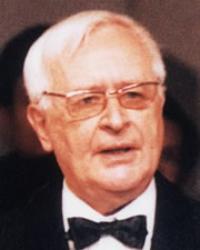
Friedrich-Eduard Konig
 Germany
- Eduard König: A German Scholar of Religion and Language
- Academic Career
- Linguistic Contributions
- Biblical Exegesis
- Retrospective Evaluation
Eduard König: A German Scholar of Religion and Language
Early Life and EducationEduard König was born in the Saxon textile town of Reichenbach. His exceptional academic achievements in his secondary education earned him special privileges, including the opportunity to skip a grade and graduate with honors in 1867.
König initially studied history and classical philology at the University of Leipzig before transitioning to theology and Oriental studies. He also pursued a wide range of courses in philology, linguistics, psychology, geography, and even mineralogy, recognizing their relevance to biblical scholarship. In 1871, he received his licentiate in theology and began teaching religion at the Royal Saxon Gymnasium.
Academic Career
In 1872, König earned his doctorate in philology with a dissertation on the role of thought, sound, and accent in language formation. He subsequently became a private lecturer in theology at the University of Leipzig and an associate professor in 1885. In 1890, he was awarded a doctor of theology degree from the University of Erlangen.
König held teaching positions at the universities of Rostock and Bonn, where he became a professor of Old Testament exegesis and director of the Old Testament seminary until his retirement in 1926. He also received an honorary doctorate in Semitic literature from the Royal University of Groningen in 1914.
Linguistic Contributions
As a linguist, König applied phonetic and physiological methods from modern philology to Semitic languages such as Hebrew and Ethiopian. His works on thought, sound, and accent as factors in language formation (1874), the script, phonetics, and morphology of Ethiopian (1877), and a critical analysis of Hebrew grammar (1881-1897) were groundbreaking.
Biblical Exegesis
König was also a prolific interpreter of Old Testament biblical texts, as evidenced by his extensive list of publications. He held a distinctive position that evolved from anti-Semitism to pan-Babylonianism, which resonated with the wider public in the early 20th century amidst Oswald Spengler's "Decline of the West," blasphemy trials, and the rise of Nazism.
Retrospective Evaluation
König characterized his work into three categories: literary and exegetical studies using philological evidence; treatises discussing the concept of religious faith; and polemical writings against the Babylonianization of the Old Testament and anti-Judaism. While his biblio-historical and exegetical works received limited recognition, his linguistic contributions have gained increasing appreciation over time.