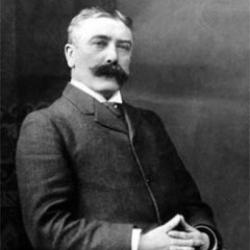
George Lakoff
 USA
USA- Early Life and Education
- Academic Career
- Generative Semantics
- Cognitive Grammar
- Metaphor Theory
- Moral Politics and Embodied Cognition
- Legacy and Impact
Early Life and Education
George Lakoff was born into a non-scientific family in 1941. He received his undergraduate degree in mathematics and English literature from the Massachusetts Institute of Technology in 1962. In 1965, he earned a doctorate in linguistics from Indiana University.
Academic Career
Lakoff initially taught at Harvard University (until 1969) and the University of Michigan (until 1972). Since 1972, he has been a professor in the Department of Linguistics at the University of California, Berkeley.
Generative Semantics
In the late 1960s, Lakoff co-founded the "generative semantics" model, which challenged the traditional view of syntax as autonomous. It proposed that the generation of linguistic expressions begins with semantic structures. Lakoff's influential articles during this period include "Linguistics and Natural Logic" (1970) and "On Generative Semantics" (1971).
Cognitive Grammar
In the mid-1970s, Lakoff rejected the assumptions of formal grammar, believing that it limited generalizations about language and its connection to human cognition. He introduced the concept of "cognitive grammar," which allowed for the integration of linguistic knowledge with insights from cognitive science. His book "Women, Fire, and Dangerous Things" (1987) provides a comprehensive exposition of cognitive grammar.
Metaphor Theory
Lakoff's groundbreaking work on metaphor, particularly in collaboration with philosopher Mark Johnson, brought him widespread recognition beyond linguistics. In the bestseller "Metaphors We Live By" (1980), they argued that metaphor is not merely a poetic device, but a fundamental mechanism for making sense of the world. They explored how abstract concepts are understood through the transfer of knowledge from more concrete domains, a phenomenon they termed "experientialism."
Moral Politics and Embodied Cognition
Lakoff developed his metaphor theory further in "Moral Politics" (1997), critiquing the metaphors underlying conservative ideology. In recent years, he has explored the concept of "embodied cognition," which examines the influence of the human body and brain on human thought and worldviews. His book "Philosophy in the Flesh" (1998) reflects his interest in this field, drawing on insights from neuroscience.
Legacy and Impact
George Lakoff is considered one of the most influential linguists of the 20th century. His work on generative semantics, cognitive grammar, and metaphor theory has fundamentally changed our understanding of language, cognition, and the human condition. His innovative and interdisciplinary approach continues to inspire researchers across a wide range of fields.