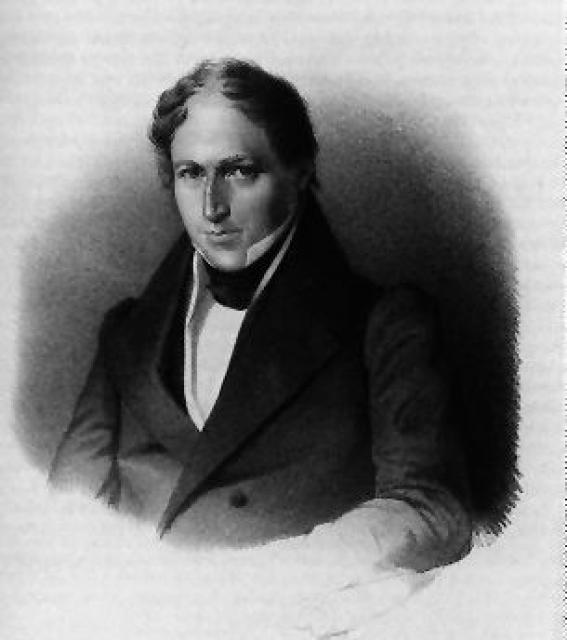
Friedrich Wilhelm Carove
 Germany
- Carl Friedrich Wilhelm Carové
- Education and Early Career
- Censorship and Political Unrest
- Ideals and Later Life
- Legacy
Carl Friedrich Wilhelm Carové
Carl Friedrich Wilhelm Carové was a German publicist, jurist, and philosopher during the 19th century. He was a prominent figure in the philosophical and political landscape of his time, known for his unique views and contributions to various intellectual disciplines.
Education and Early Career
Carové studied law and philosophy at the University of Berlin, where he became a disciple of the renowned philosopher Georg Wilhelm Friedrich Hegel. His philosophical inclinations were heavily influenced by Hegel's teachings, and he embraced the principles of German idealism. After graduating, Carové embarked on a career in academia, delivering lectures on philosophy at the universities of Berlin and Breslau.
Censorship and Political Unrest
During the tumultuous period of the Vormärz in Germany, Carové faced censorship and political suppression. In 1820, he was forced to resign from his teaching position due to his controversial writings and political views. Despite these setbacks, he continued to engage in public discourse and activism, advocating for liberal reforms and a united Germany.
Ideals and Later Life
Carové's philosophical beliefs centered on the concept of a universal religion that would transcend all religious divisions and foster human unity. He believed that true religion should be based on reason and morality, rather than dogma or superstition. Carové participated in the revolutionary movement of 1848, serving as a member of the Frankfurt Parliament. He later attended the Paris Peace Congress in 1849, where he voiced his pacifist and humanitarian ideals.
Legacy
Carl Friedrich Wilhelm Carové left a lasting impact on the intellectual and political landscape of Germany. His writings and activism contributed to the development of philosophical thought, the pursuit of political unity, and the promotion of peace and religious tolerance. His legacy serves as a testament to the enduring power of ideas and the indomitable spirit of those who strive for a better world.




