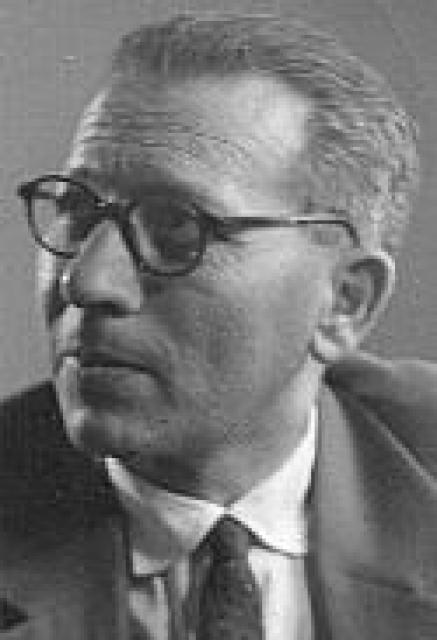
Gabor Darvas
 Hungary
- Early Life and Education
- Music Education and Orchestral Works
- Emigration and Return to Hungary
- Professional Career
- Electronic Music and Legacy
- Musicological Contributions
Early Life and Education
Janos Darvas was born in Transylvania, Austria-Hungary, in 1913. In 1918, the Steinberger family relocated to Budapest, where Darvas completed his gymnasium and piano studies at the music school.
Music Education and Orchestral Works
From 1926 to 1932, Darvas attended the Franz Liszt Academy of Music, initially studying bassoon and later composition under Zoltan Kodaly. After graduating, he composed orchestral music for the Hungarian Radio in the 1930s.
Emigration and Return to Hungary
In 1939, Darvas emigrated to Chile, where he resided until the end of World War II. During this time, he collaborated with Austrian conductor Erich Kleiber and wrote articles for music journals. In 1948, he returned to Hungary.
Professional Career
From 1951 onward, Darvas resumed composing. He worked at Hungarian Radio from 1949 to 1960, and served as the chief editor of Editio Musica Budapest from 1955 to 1957. He also led Hungaroton, the Hungarian state record label, as its artistic director from 1957 to 1959.
Electronic Music and Legacy
Although Darvas's compositional output was modest, he played a significant role in introducing electronic music to Hungary. His arrangements and orchestrations of music from the 15th century through the works of Franz Liszt, Ludwig van Beethoven, and Pyotr Ilyich Tchaikovsky were also instrumental in shaping his legacy.
Musicological Contributions
Darvas's extensive musicological writings include "The Symphony Orchestra" (1958), "Secrets of Orchestral Music" (1960), "Instruments Through the Millennia" (1961 and 1975), "Introduction to the World of Music" (1965-1968), "The Anatomy of Music" (1974 and 1985), and a two-volume history of music (1977 and 1981).


