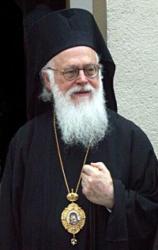
Gabriel Gruber
 Austria
- Birth and Early Education
- Engineering and Architecture
- Jesuit Missions in Russia
- Papal Recognition and Imperial Support
- Formal Recognition of the Jesuits in Russia
- Expanding Jesuit Influence
- Tragic End
Birth and Early Education
Gabriel Gruberwas born in Vienna, Austria, and at the young age of 15, he joined the Society of Jesus (Jesuits). From 1757 to 1760, Gruber studied Latin, Greek, and philosophy in Leoben and Graz, Austria. Subsequently, from 1761 to 1762, he pursued mathematics in Trnava before being ordained as a priest in Graz in 1766.
Engineering and Architecture
Gruber possessed exceptional engineering skills, specializing in mechanics and hydraulics. He studied architecture, mathematics, and navigation. In 1769, he taught at the Higher Engineering School in Ljubljana, Slovenia. After the dissolution of the Jesuit Order in 1773, Gruber served as an engineer at the court of Austrian Emperor Joseph II. He designed the Gruber Palace (now the Archives of Slovenia) in Ljubljana and also constructed the Gruber Canal.
Jesuit Missions in Russia
In 1784, Gruber arrived in Belarus, where he taught architecture and physics at the Polotsk Jesuit College until 1800. Under his leadership, the college expanded its scientific base and became a significant technical center. Gruber's work earned the approval of Empress Catherine II and Emperor Paul I, whom he met in 1797 during the emperor's visit to Polotsk.
Papal Recognition and Imperial Support
In February 1799, Gruber arrived in Saint Petersburg and met with Paul I in June of that year. The emperor pledged his support to the Jesuit Order, seeing it as a means to counter the influence of the French Revolution. Gruber gained the emperor's trust, successfully treating his wife's chronic toothache. He enjoyed such close access to Paul that he could enter the emperor's presence without announcement.
Formal Recognition of the Jesuits in Russia
In October 1800, Paul I issued a decree allowing the Jesuits to direct the education system in Lithuania and granting them control of Saint Catherine's Church in Saint Petersburg. Gruber was appointed assistant to the General Vicar of the Society of Jesus in Russia, Franciszek Kare. Emperor Paul I also petitioned Pope Pius VII for formal recognition of the Jesuit Order in Russia, and in March 1801, the pope issued a breve acknowledging the legitimacy of the Jesuit structures in Russia. After Kare's death in October 1802, Gruber was elected General of the Order.
Expanding Jesuit Influence
Under Emperor Alexander I, the Jesuits' privileges were curtailed, but Gruber established Jesuit missions in Saratov (1803), Odessa (1804), and Astrakhan (1805). He also re-established a Jesuit presence in Riga in 1803. Gruber maintained connections with former Jesuits, encouraging them to join the mission in Belarus. He also secured the pope's restoration of Jesuit structures in the Kingdom of Naples, which became a branch of the Society of Jesus in Saint Petersburg. Gruber's years in Russia witnessed a notable spread of Catholic ideas among Russian intellectuals.
Tragic End
Gabriel Gruber tragically perished on April 7, 1805, in a fire at his residence. His successor as General of the Order was Tadeusz Brzozowski. Gruber's death came just two weeks before the signing of the anti-Napoleon alliance between England and Russia in Saint Petersburg, leading to speculation that his demise may not have been entirely coincidental.