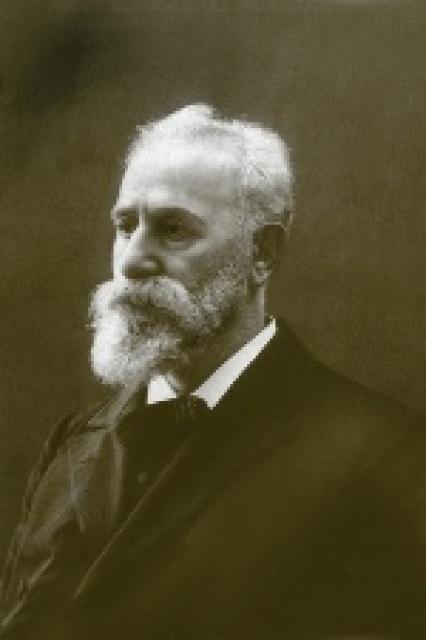
Gazaros Agayan
 Armenia
- Early Life and Education
- Literary Career and Publications
- Educational and Editorial Roles
- Political Imprisonment and Surveillance
- Honors and Legacy
- A street, a school, and a bust in Yerevan bear his name.
Early Life and Education
Arshak Chopanyan was born in 1832 in Echmiadzin, Armenia. In 1853, he graduated from the Tiflis Armenian Seminary and embarked on a career in printing.
Literary Career and Publications
After working as a typesetter in Tiflis and Moscow, Chopanyan moved to St. Petersburg, where he was employed at the Russian Imperial Academy of Sciences. In 1867, he became the manager of the Echmiadzin printing house. From 1869 to 1870, he served as the editor of the monthly journal "Ararat."
Chopanyan's notable works include the novels "Arutyun and Manvel," "Two Sisters," "Anaid," and "Areg Nazan." He also translated Pushkin's "The Tale of the Fisherman and the Fish."
Educational and Editorial Roles
In addition to his writing, Chopanyan was an influential educator. He taught in schools throughout the Caucasus region and served as an inspector of Armenian schools in Georgia and Imereti. He also held editorial roles at the journals "Portz" (Experience) and "Akhpyur" (Stream).
Political Imprisonment and Surveillance
In 1895, Chopanyan was arrested for alleged membership in the "Hnchak" political party and exiled to Nor-Nakhichevan and later to Crimea. Upon his release, he remained under the watchful eye of the Tsarist gendarmerie.
Honors and Legacy
In May 1902, Chopanyan's 40th literary anniversary was celebrated. He participated in the October 1905 demonstration. Chopanyan passed away in 1911 and was laid to rest in the Pantheon of Khojivanka in Tbilisi.
A street, a school, and a bust in Yerevan bear his name.
Educational ContributionsChopanyan made significant contributions to Armenian education. He compiled a series of Armenian language textbooks, with his alphabet "Ishkhanutyan Leggewin" (Learning the Mother Tongue) remaining in use for over four decades.


